
Table of Contents
ToggleWhen Ramattra entered the Overwatch roster in December 2022, he didn’t just join the tank lineup, he fundamentally changed how players think about frontline aggression and adaptability. Unlike any other hero, this Omnic revolutionary can shift between ranged poke damage and devastating close-quarters brawling mid-fight, forcing opponents to constantly reassess their approach. His dual-form kit makes him one of the most mechanically interesting tanks in the game, rewarding players who can read the flow of battle and transform at the perfect moment.
But that versatility comes with a learning curve. Knowing when to stay in Omnic Form and when to activate Nemesis Form separates good Ramattra players from great ones. His ultimate, Annihilation, can single-handedly win team fights, or become a feeding opportunity if mistimed. Whether you’re picking up Ramattra for the first time or looking to climb ranks with him in 2026’s meta, this guide breaks down everything you need to dominate as Overwatch’s shape-shifting tank.
Key Takeaways
- Ramattra’s dual-form mechanic fundamentally changes how he approaches engagements—staying in Omnic Form for ranged poke and switching to Nemesis Form when enemies cluster for devastating close-quarters brawling.
- Mastering Ramattra requires tracking enemy cooldowns obsessively and understanding fight tempo, transforming at precisely the right moment separates good players from great ones.
- His Annihilation ultimate can extend well beyond 4 seconds in team fights by positioning among clustered enemies, but scattering and proper team coordination are critical to counter it effectively.
- Ramattra pairs exceptionally well with Ana for Nano Boost sustain and Kiriko for Protection Suzu, while heroes like Bastion, Ana, and Roadhog exploit his positioning weaknesses if he overcommits in Nemesis Form.
- On control maps and objective clustered fights, Ramattra dominates the current meta as an A-tier pick, but struggles on open maps where enemies can spread and prevent his close-range effectiveness.
Who Is Ramattra? Lore and Background
Ramattra stands as one of Overwatch’s most philosophically complex characters. Originally designed as a Ravager unit during the Omnic Crisis, he was built for war, programmed to destroy humanity without question. After the conflict ended, Ramattra underwent a profound transformation, studying under Mondatta alongside Zenyatta and embracing the peaceful Shambali philosophy.
But peace didn’t last. Witnessing continued prejudice and violence against Omnics, Ramattra became disillusioned with pacifism. He founded Null Sector, a radical Omnic liberation movement willing to use force to secure Omnic rights. This put him in direct opposition to his former brother Zenyatta, creating one of the game’s most tragic relationships.
His character design reflects this duality. In Omnic Form, he’s methodical and composed, a leader who prefers calculated strikes. When he enters Nemesis Form, the Ravager awakens, channeling the raw aggression he was originally built for. This isn’t just a gameplay mechanic: it’s a narrative expression of his internal struggle between enlightenment and violence.
Ramattra’s voice lines reveal a leader burdened by necessity rather than driven by hatred. He doesn’t fight humanity out of malice, but from a calculated belief that liberation requires force. That moral complexity makes him one of Overwatch’s most compelling additions since the game’s 2016 launch.
Ramattra’s Role and Playstyle in Overwatch
Ramattra functions as a tempo tank, controlling the pace of engagements through adaptive pressure. He excels at mid-range poke in Omnic Form, whittling down barriers and forcing enemy cooldowns before committing. Once openings appear, he transforms into Nemesis Form to capitalize, punching through defensive lines with area denial that few heroes can match.
Unlike pure brawl tanks like Reinhardt or dive tanks like Winston, Ramattra operates on fluidity. He doesn’t lock into one engagement style. Instead, he reads the situation: poking when the enemy has defensive advantage, brawling when they’re vulnerable, and using his ultimate to sustain pressure through multiple fight phases.
His playstyle rewards fight IQ over mechanical precision. Tracking ultimates, recognizing when supports have used cooldowns, and identifying the moment enemies cluster, these skills matter more than raw aim. Players who thrive on decision-making and macro-level awareness will find Ramattra incredibly satisfying.
Understanding Ramattra’s Dual Forms
The core of Ramattra’s identity lies in his two distinct forms, each serving completely different tactical purposes.
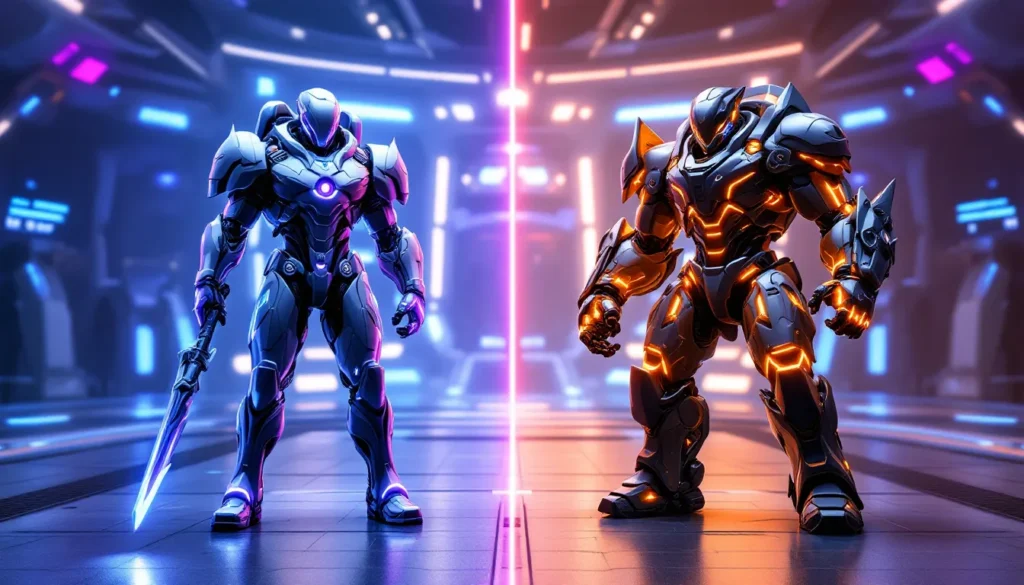
Omnic Form is his default state. Here, he’s a ranged tank with sustain tools and area control. He can apply pressure from relative safety, contest high ground with his staff projectiles, and use Ravenous Vortex to zone opponents. This form excels when your team needs space control without overcommitting, or when enemy burst damage makes close-range risky.
Nemesis Form transforms Ramattra into a close-quarters juggernaut. His health pool gains temporary armor, and he trades ranged staff attacks for Pummel, wide-swinging punches that cleave through multiple enemies. Block replaces Ravenous Vortex, giving him 75% damage reduction from the front while still allowing movement. This form thrives in tight spaces, on objectives, and during committed team fights where sustained brawling wins.
The 8-second duration and subsequent cooldown create a risk-reward dynamic. Transform too early, and you waste precious Nemesis uptime on positioning. Transform too late, and you miss the window to capitalize on enemy mistakes. Mastering this rhythm defines high-level Ramattra play.
Ramattra’s Abilities Breakdown
Understanding the exact mechanics behind each ability lets you maximize value in every situation.
Omnic Form Abilities
Void Accelerator (Primary Fire): Ramattra’s staff fires projectiles in a straight line. Each shot deals 6 damage with a fire rate of 25 rounds per second before the ammo depletes. The 100-round magazine provides sustained poke, and the projectiles have no damage falloff, making them effective at any range. Use this to pressure shields, contest snipers, and farm ultimate charge before committing to brawls.
Ravenous Vortex (Ability, 12-second cooldown): Ramattra launches a nano swarm that creates a damaging field on impact. Enemies caught inside take 15 damage per second and experience a 30% movement speed reduction. The vortex lasts 4 seconds. This ability denies mobility cooldowns, Genji can’t dash through it effectively, Tracer gets slowed mid-blink recovery, and flankers lose their escape routes. Place it on high ground to force enemies down, or under airborne targets like Pharah to punish positioning.
Nemesis Form Abilities
Nemesis Form (Transformation, 8-second duration, 7-second cooldown after expiration): Activating this ability grants Ramattra 150 temporary armor and fundamentally changes his kit. The transformation is instant and can be triggered mid-fight for clutch survivability. The armor decays when Nemesis Form ends, so timing matters, you want to absorb burst damage during the armored window.
Pummel (Primary Fire in Nemesis Form): Wide, sweeping punches in front of Ramattra. Each punch deals 60 damage per second in a cone, hitting multiple enemies simultaneously. The range is deceptively long, about 10 meters, letting you threaten backlines without fully committing. Pummel cleaves, so positioning yourself to hit multiple squishies multiplies your value. It’s devastating on point in overtime or in tight corridors where enemies can’t spread.
Block (Ability in Nemesis Form): Hold to reduce incoming damage from the front by 75%. Unlike barriers, Block doesn’t break, it’s percentage-based reduction. You can move at full speed while blocking, making it incredible for closing distance under fire or protecting teammates behind you. But, you’re vulnerable from behind and sides, so awareness is critical. Block doesn’t stop crowd control effects like Ana’s Sleep Dart or Cassidy’s Flashbang, only damage.
Ultimate Ability: Annihilation
Ramattra’s ultimate is where he becomes terrifying. Annihilation creates an energy field around him that deals 20 damage per second to all enemies within range. The base duration is 4 seconds, but here’s the kicker: every enemy hero within the field extends the duration by 0.6 seconds, and hitting enemies with Pummel grants an additional 1 second per hit.
In practice, a well-positioned Annihilation in a clustered team fight can last 10+ seconds, forcing the enemy to either scatter (losing formation) or die. The field persists even if Ramattra is stunned or slept, though killing him ends it immediately. Many competitive teams using proper team coordination can extend Annihilation to fight-winning durations by keeping Ramattra alive through the chaos.
Combine Annihilation with Nemesis Form for maximum survivability, the armor and Block let you wade into the enemy team while the field drains them. Just watch for Ana’s Biotic Grenade, which can shut down your sustain and leave you vulnerable.
How to Play Ramattra: Strategy and Positioning
Effective Ramattra play revolves around controlled aggression, knowing when to apply pressure and when to reset.
When to Use Omnic Form vs. Nemesis Form
Stay in Omnic Form when:
- Enemy team has poke advantage (Widowmaker, Hanzo, Ashe)
- You need to contest high ground or off-angles
- Farming ultimate charge safely before a fight
- Enemy has burst cooldowns available (Ana nade, Hog hook)
- Your team isn’t ready to commit to a brawl
Transform into Nemesis Form when:
- Enemy team clusters (on point, in chokes, grouped behind barrier)
- Enemy support cooldowns are down (no Immortality Field, no Suzu)
- You have support resources committed to you (Nano Boost, Kiriko Suzu, Ana healing)
- Contesting objectives in overtime
- Enemy barrier is broken and they’re vulnerable
The best Ramattra players track enemy cooldowns obsessively. If you know Ana just used Biotic Grenade on your teammate, that’s a 10-second window where she can’t anti-heal you during Nemesis aggression.
Positioning and Map Control
In Omnic Form, play like a ranged DPS with more health. Take off-angles that let you spam Void Accelerator into enemy formations without exposing yourself to focus fire. High ground is your friend, you can pressure from above while dropping Ravenous Vortex on enemies below.
When you transform, positioning shifts dramatically. You want to be in the enemy’s face but not isolated. Ideal Nemesis positioning puts you among 2-3 enemies where Pummel cleaves, while your team follows up on the space you create. Tight corridors like Lijiang Tower’s Control Center or Numbani’s first choke amplify Nemesis Form’s effectiveness.
Map geometry matters. On open maps like Junkertown, Omnic Form dominates, you can poke from range and use Ravenous Vortex to control space without committing. On close-quarters maps like Ilios Ruins, Nemesis Form becomes the primary mode, especially during objective fights.
Avoid isolated flanks. Ramattra isn’t a dive tank. If you push too deep without support, you’ll burn Nemesis Form defensively and accomplish nothing. Instead, lead your team’s frontline, be the first one in, but not by so much that you’re 1v6.
Best Team Compositions and Synergies
Ramattra thrives in compositions that enable his transformation windows and capitalize on the space he creates.
Support Heroes That Enable Ramattra
Ana might be Ramattra’s single best support partner. Her Biotic Rifle outputs enough healing to sustain Nemesis Form aggression, and Nano Boost on Nemesis Ramattra is absolutely terrifying, 50% damage reduction stacks with Block for near-immortality while Pummel shreds enemies. Her Sleep Dart also protects you from enemy dive.
Kiriko provides Protection Suzu at the perfect moment, right when you’re deep in Nemesis Form and the enemy focuses you. Teleporting to you for emergency support or helping you escape collapsed fights is invaluable. Her high-damage kunai also benefits from the space you create.
Zenyatta pairs well if you need damage amplification. Orb of Discord on targets you’re pummeling accelerates kills, and his Transcendence can sustain your Annihilation pushes. Just be aware he can’t save you from burst damage the way Ana or Kiriko can.
Lifeweaver works in brawl-heavy compositions. His Life Grip can yank you out of bad Nemesis Form commits, and his healing output keeps you topped off. But, he lacks the utility that Ana or Kiriko bring.
DPS Heroes That Complement Ramattra
Reaper is a natural partner. When you transform and wade into the enemy team, Reaper follows, turning the frontline into a death zone. Both heroes want to fight at close range, and enemies can’t focus both of you simultaneously.
Mei amplifies your area denial. Her Ice Wall can split teams, forcing half into your Ravenous Vortex or Annihilation field. Blizzard combined with Annihilation is a team-wipe combo, enemies trapped in Blizzard can’t escape your damage field.
Symmetra works in spam-heavy comps. Her Sentry Turrets combo with Ravenous Vortex, slowed enemies take more turret damage and can’t escape. Photon Barrier also protects you during Nemesis Form engages. According to recent guides from Dot Esports, Symmetra-Ramattra comps have seen increased play on control maps in 2026.
Genji benefits from your disruption. While you’re pummeling the frontline, Genji can dive the backline with less peel to worry about. Your Ravenous Vortex also sets up easy Dragonblade targets.
Countering Ramattra: Weaknesses and Counter-Picks
Even though his versatility, Ramattra has exploitable weaknesses that smart opponents can punish.
Heroes That Counter Ramattra
Bastion shreds Nemesis Form. His Configuration: Assault outputs enough damage to burn through Block and armor before Ramattra can close the distance. Even in Omnic Form, Bastion’s sustained fire makes poke trades unfavorable.
Ana can completely shut down Ramattra’s value. Biotic Grenade prevents healing during Nemesis Form, turning your aggression into a death sentence. Sleep Dart interrupts Annihilation value, and her range lets her pressure you safely in Omnic Form.
Roadhog punishes positioning errors. If you overextend in Nemesis Form, Chain Hook pulls you further out of position, and his high burst damage can kill you even through armor. His Take a Breather also heals through Annihilation damage, reducing its effectiveness.
Orisa can out-brawl you. Her Fortify negates Ravenous Vortex’s slow, and Javelin Spin pushes you away while blocking Pummel damage. Her Terra Surge pull can also disrupt your Annihilation positioning.
Reaper out-damages you in close quarters. Hellfire Shotguns deal more DPS than Pummel, and Wraith Form lets him escape Ravenous Vortex or Annihilation. If you commit to Nemesis Form against Reaper, you usually lose the 1v1.
How to Counter Ramattra as an Enemy
If you’re facing Ramattra, focus on these strategies:
Punish Nemesis Form cooldowns. When Ramattra exits Nemesis Form, he’s vulnerable for 7 seconds. That’s your window to engage, he can’t transform again to save himself.
Spread out during Annihilation. The ultimate’s range is limited (about 10 meters). If your team scatters, Ramattra can only drain 1-2 heroes instead of the full squad, drastically reducing duration extensions.
Save anti-heal for his aggression. Ana’s Biotic Grenade or Junker Queen’s Carnage applied during Nemesis Form denies the sustain he needs to survive deep dives.
Kite in open spaces. Ramattra struggles on open maps where Nemesis Form can’t reach targets. Heroes with mobility (Tracer, Soldier: 76, Pharah) can force him to stay in Omnic Form, where he’s less threatening. Professional players highlighted in The Loadout frequently recommend this tactic in ranked play.
Focus fire when Block is down. If Ramattra uses Block to approach, wait for it to end, then burst him. He can only Block for so long before needing to Pummel, and that’s when he’s vulnerable.
Advanced Tips and Tricks for Ramattra Players
Taking your Ramattra play from competent to exceptional requires mastering these nuances.
Animation cancels: You can cancel the Ravenous Vortex throw animation by immediately transforming into Nemesis Form. This lets you zone with Vortex and immediately capitalize with Pummel before enemies react.
Vortex placement prediction: Don’t throw Ravenous Vortex where enemies are, throw it where they’re going. If a Genji is dashing toward your backline, place Vortex at his destination. He’ll land in it and lose his escape.
Block while retreating: If a Nemesis Form engage goes bad, activate Block and backpedal toward your team. You’ll mitigate most incoming damage while repositioning. Many players forget they can move at full speed during Block.
Pummel range is generous: The range on Pummel is longer than it appears. You can often start hitting enemies before they expect it, especially if they’re backing up. This lets you threaten without fully committing.
Body blocking with Omnic Form: In Omnic Form, you’re still a 500 HP tank. Position yourself between squishy teammates and enemy angles to absorb poke damage meant for them.
Ultimate Economy and Timing
Annihilation charges relatively quickly, about 2200 points. A well-placed Ravenous Vortex hitting multiple enemies and consistent Void Accelerator spam can build it in under a minute.
When to use Annihilation:
- Overtime point contests where enemies must cluster
- Following up on CC ultimates (Zarya Graviton Surge, Sigma Gravitic Flux, Mei Blizzard)
- When your team has support ultimates to keep you alive (Transcendence, Sound Barrier)
- To zone enemies off payloads or chokes during crucial pushes
When to hold Annihilation:
- Enemy team is spread across the map
- Enemy has ultimates that directly counter it (Roadhog Whole Hog to push you away, Ana Nano on a target to burst you down)
- You’re already winning the fight without it, save for next engagement
Many players waste Annihilation trying to 1v5. It’s a team fight ultimate, not a dueling tool. According to settings and strategies shared on ProSettings, top-ranked Ramattra players track enemy support ultimates before committing to Annihilation.
Common Mistakes to Avoid
Transforming too early: Don’t activate Nemesis Form while still approaching the fight. You’ll waste precious uptime on positioning instead of damage. Stay in Omnic Form until you’re in Pummel range.
Ignoring cooldown timers: Ramattra has multiple cooldowns to track (Nemesis transformation, Ravenous Vortex, Block). Going in without Vortex available removes key zoning, and engaging when Nemesis is on cooldown leaves you without your survival tool.
Solo Annihilation: Popping ult when your team isn’t ready to follow up accomplishes nothing. Annihilation creates pressure, but your team needs to capitalize. Communicate before ulting.
Fighting on enemy terms: If the enemy has range advantage and you stay in Omnic Form trying to match their poke, you’re playing to their strengths. Either hard commit with Nemesis or reposition entirely.
Forgetting you’re a tank: Your job is creating space and enabling teammates, not chasing kills. Sometimes the right play is absorbing damage and zoning rather than fragging out.
Ramattra in the Current Meta
As of March 2026, Ramattra sits comfortably in the A-tier of tank picks across most ranks. The recent balance patch in Season 14 left him largely untouched, which speaks to Blizzard’s satisfaction with his current power level.
In ranked play, Ramattra dominates control maps and hybrid first points where fights cluster around objectives. His Annihilation forces teams to either commit or scatter, creating decisive moments that solo queue teams struggle to coordinate against. He’s less prevalent on pure payload or long-sightline maps where poke-heavy compositions limit his Nemesis Form value.
Competitive play sees Ramattra as a situational pick rather than a meta staple. Teams run him on specific maps, Lijiang Control Center, Nepal Sanctum, King’s Row first point, where his kit excels. He pairs well with the current Kiriko-Ana support meta, both of whom can enable his aggressive windows.
The rise of Mauga as a brawl tank has created an interesting dynamic. Both want to fight at close range, but Ramattra’s Annihilation can outlast Mauga’s Cardiac Overdrive, giving him an edge in the mirror matchup. Conversely, Sigma has seen increased play as a Ramattra counter, using Kinetic Grasp to absorb Void Accelerator spam and Accretion to stun him during Nemesis Form.
One shift worth noting: DPS players have adapted to Ramattra’s prevalence by running more Bastion and Reaper specifically to counter him. If you’re picking Ramattra into a team already showing tank counters, you might be better served by switching.
The hero remains incredibly strong in the hands of players who understand fight tempo and form management. He’s not a braindead win button, which keeps him balanced at high ranks while still being accessible to newer players learning tank fundamentals.
Conclusion
Ramattra rewards players who think like chess players, always two moves ahead, tracking cooldowns, reading enemy formations, and knowing exactly when to shift from patient zoning to overwhelming aggression. His dual forms give him an answer to nearly every situation, but only if you recognize which form the moment demands.
Master the rhythm of his transformation windows. Learn to read when enemy supports have used their defensive cooldowns. Practice placing Ravenous Vortex not where enemies are, but where they’ll be. These fundamentals separate Ramattra players who feed from those who carry.
The beauty of Overwatch’s Ramattra lies in his skill ceiling, there’s always another micro-optimization, another cooldown to track, another positioning improvement. Whether you’re grinding through Platinum or pushing for Top 500, he offers depth that keeps every match feeling fresh. Now get in there, transform at the right moment, and remind the enemy team why Null Sector chose violence.


