Table of Contents
ToggleRoadhog is one of those heroes who can absolutely dominate a match when played right, or become a massive ult battery for the enemy team when played poorly. There’s no middle ground. With his intimidating presence, one-shot potential, and self-sustain that makes supports question their life choices, he’s a unique tank in Overwatch 2’s roster. But mastering the hook-and-eliminate combo takes more than decent aim: it requires understanding positioning, cooldown management, and when to play aggressively versus when to peel back.
In 2026, Roadhog’s position in the meta continues to evolve with each balance patch. Recent changes to his kit have shifted how he’s played at higher ranks, and understanding these nuances separates the players who feed from those who carry. Whether you’re looking to add Roadhog to your tank rotation or refine your existing gameplay, this guide breaks down everything from ability mechanics to advanced strategies that’ll help you climb the competitive ladder.
Key Takeaways
- Roadhog dominates through hook accuracy and positioning discipline—landing hooks on high-priority targets (supports > DPS > tanks) while avoiding wasted cooldowns separates carrying players from ult batteries.
- Self-sustain management is critical to Roadhog’s effectiveness; every health point healed feeds enemy ultimate charge, so minimize unnecessary healing and save Take a Breather for moments when you’re actually in danger.
- Roadhog excels in brawl compositions and anti-dive setups on tight-corridor maps but struggles significantly against high-mobility heroes (Reaper, Tracer, Genji) and coordinated teams that focus fire—know your matchups and swap when hard-countered.
- The hook combo (Hook > Primary Fire > Melee) deletes 200–250 HP heroes when executed with proper timing and crosshair placement, making one-shot consistency a mechanical skill that improves through VOD review and practice.
- Roadhog’s effectiveness scales inversely with rank; he dominates Bronze–Gold through positioning exploits but requires superior cooldown management and off-angle hooks to remain viable in Masters+ competitive play.
- In early 2026, Roadhog sits in B-tier viability—balanced but not dominant—with recent patches increasing his survivability and environmental kill potential while requiring more deliberate hook usage due to cooldown increases.
Who Is Roadhog? Character Overview and Backstory
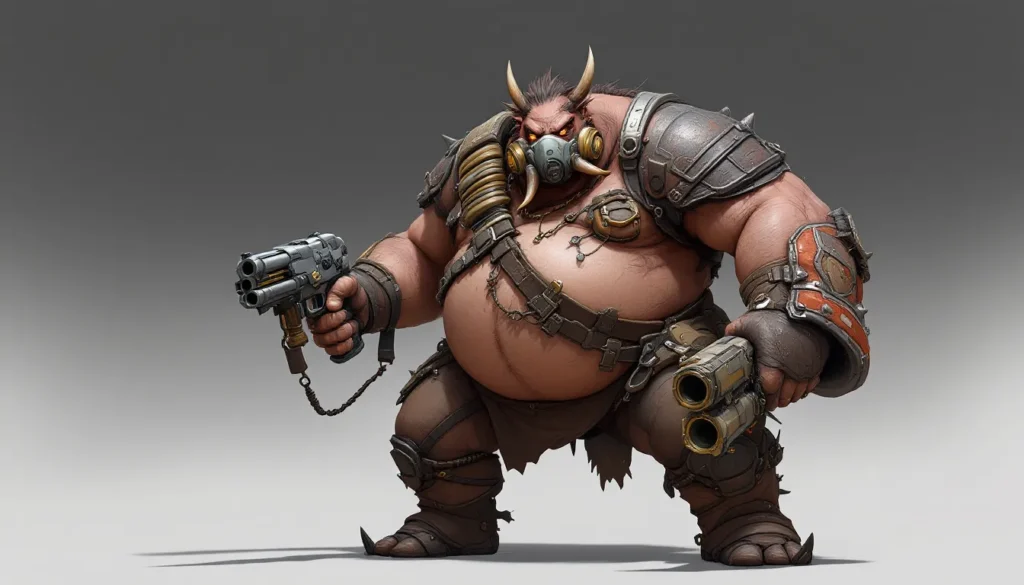
Roadhog, real name Mako Rutledge, is a tank hero in Overwatch who embodies the post-apocalyptic outback aesthetic. Standing at a massive build with his signature gas mask and belly, he’s part of the game’s original roster and has remained a controversial pick throughout Overwatch’s lifespan.
Lore-wise, Roadhog hails from the Australian outback, where the Omnic Crisis devastated his homeland. After the government’s mishandling of the crisis led to the irradiation of the outback, Mako became Roadhog, a ruthless enforcer and bodyguard to Junkrat. The two formed an unlikely criminal duo, traveling the world causing mayhem and pulling off heists.
Gameplay-wise, he’s classified as a tank, but he breaks the traditional tank mold. Unlike barrier-focused tanks such as Reinhardt or dive tanks like Winston, Roadhog functions more like a brawler with self-sustain. He doesn’t protect his team with shields or bubbles: instead, he creates space through threat and elimination potential.
His kit revolves around punishing positioning errors. That Chain Hook is his signature ability, land it on a squishy target, and they’re likely dead. Miss it, and you’re a 600 HP ult battery with limited mobility. This feast-or-famine playstyle makes him incredibly satisfying to master but frustrating when you’re off your game.
Roadhog’s character design emphasizes self-reliance. His Take a Breather ability allows him to heal without support, making him viable in less coordinated environments. But, this same trait makes him less synergistic in organized team play, where tanks typically enable their teammates rather than operate independently.
Roadhog’s Role and Position in the Current Meta
Tank Classification and Team Composition
Roadhog occupies a weird space in Overwatch 2’s tank ecosystem. He’s officially classified as a tank, but he plays more like a fat DPS with a health pool. Unlike other tanks who create space through barriers, mobility, or crowd control, Roadhog creates space through elimination threat.
In team compositions, he works best as a brawl tank in close-quarters maps or as a counter-pick against dive heroes. He pairs well with heroes who can capitalize on his picks, think Baptiste for damage amp on hooked targets or Ana for anti-nade combos. But, he struggles in compositions that require traditional tanking duties like shield pressure or peeling for backline supports.
The single-tank format of Overwatch 2 has been both a blessing and a curse for Roadhog. Without an off-tank to cover his weaknesses, he’s more vulnerable to being focused down. But he also gets more resources from his team, making his self-heal even more valuable.
Strengths and Weaknesses in Overwatch 2
Roadhog’s strengths are pretty clear:
- One-shot potential: Land a hook on most 200-250 HP heroes, and they’re deleted from the fight
- Self-sustain: Take a Breather heals 350 HP with 50% damage reduction, making him incredibly hard to kill in 1v1s
- Ultimate charge denial: His self-heal doesn’t feed enemy support ults the way healing from teammates does
- Punishes poor positioning: Forces enemies to play around natural cover and respect hook range
- Soloqueue friendly: Less reliant on team coordination than other tanks
But his weaknesses are equally significant:
- Massive hitbox: One of the easiest heroes to land shots on, feeding enemy DPS and support ults
- No damage mitigation for team: Doesn’t protect teammates like other tanks
- Limited mobility: No movement abilities make him vulnerable to kiting and poke damage
- Cooldown dependent: When hook is down, his threat level drops dramatically
- Struggles against coordinated teams: Gets focused and melted in organized play
As of early 2026, Roadhog sits in a middle-tier position. He’s not dominating the meta like Ramattra or Orisa in certain patches, but he’s far from unplayable. His effectiveness scales inversely with rank, he dominates in lower ranks where positioning is loose but struggles in high Diamond and above where teams know to bait hook and focus fire.
Understanding Roadhog’s Abilities and How to Use Them
Scrap Gun: Primary and Secondary Fire Mechanics
Roadhog’s Scrap Gun has two firing modes, and understanding both is critical.
Primary Fire shoots a short-range spread of scrap in a cone. Each shot fires 25 pellets, with each pellet dealing 6 damage for a maximum of 150 damage if all pellets connect. The damage falloff begins at 15 meters and ends at 30 meters. This fire mode is most effective at close range, think 5-10 meters, where the spread is tight enough to land most pellets.
Use primary fire for:
- Post-hook combos (this is your bread and butter)
- Close-range brawling
- Finishing low-health targets
Secondary Fire (right-click) launches a scrap ball that detonates at 10 meters, releasing the same pellet spread. This extends Roadhog’s effective range, allowing him to threaten targets at medium distance. The trick is positioning yourself so the detonation occurs right on the target.
Use secondary fire for:
- Poking shields and barriers
- Damaging targets between 8-12 meters away
- Pre-hook damage to secure kills on higher HP targets
The reload time is 2 seconds for 5 shells. Managing your ammo is crucial, getting caught with an empty clip after hooking someone is embarrassing and often fatal.
Chain Hook: Landing the Perfect Hook Every Time
Chain Hook is Roadhog’s defining ability. It has a 20-meter range, 8-second cooldown, and deals 30 damage on impact. When it connects, it pulls the target directly in front of Roadhog and briefly stuns them.
The hook hitbox is relatively forgiving, but it’s not a hitscan weapon, it has travel time. Lead your targets and predict movement. Against strafing enemies, aim slightly ahead. Against airborne targets, account for their trajectory.
Key hook techniques:
- Hook priority: Always prioritize hooked targets in this order: supports > DPS > tanks (unless securing a kill)
- Break line of sight: Hook someone, then immediately sidestep around a corner to prevent their team from saving them
- High-ground hooks: Hooking someone from high ground pulls them up to you, often separating them from their team
- Environmental kills: On maps like Ilios Well or Nepal Sanctum, hook placement can result in instant environmental eliminations
Common hook mistakes include throwing it predictably (always from the same angle), hooking tanks when better targets are available, and failing to confirm the kill after landing the hook.
Take a Breather: Self-Healing and Damage Reduction
Take a Breather heals 350 HP over 1 second while providing 50% damage reduction. The cooldown is 8 seconds, same as hook.
This ability is what makes Roadhog viable as a solo tank. Unlike other tanks who rely on supports, he can sustain himself through poke damage and disengage from losing fights.
Optimal usage:
- Behind cover: Always use it behind natural cover when possible to avoid feeding ult charge
- During team fights: The damage reduction makes it viable to use mid-fight if you’re taking focus fire
- Bait cooldowns: Sometimes using it in the open baits out enemy abilities and ultimates
- Deny kills: If you’re anti-healed by Ana, the damage reduction still applies, making it useful defensively
The biggest mistake players make is using it on cooldown. Save it for when you actually need it, dropping below 300 HP is a good rule of thumb unless you’re actively taking damage.
Whole Hog: Maximizing Ultimate Impact
Whole Hog is Roadhog’s ultimate, which fires a continuous stream of scrap that deals damage and knocks back enemies. It lasts 6 seconds and can output up to 5,040 damage if every pellet connects (it won’t).
The ult charges relatively fast thanks to Roadhog’s self-heal and large damage output. Effective Whole Hog usage focuses on:
- Environmental kills: This is the #1 use. On maps with ledges, Whole Hog secures easy multi-kills
- Zone control: Force enemies off the objective or split their team during crucial fights
- Tank busting: The sustained damage shreds barriers and burns down enemy tanks
- Peeling: Save it to counter enemy dive ultimates like Genji’s Dragonblade
Poor Whole Hog usage includes popping it in the open where you get stunned immediately, using it when your team can’t capitalize, or firing it into a Zarya bubble (please don’t).
Position yourself with your back to a wall or in a corner to prevent being displaced, and try to catch enemies against walls to prevent them from escaping the knockback.
Advanced Roadhog Strategies and Gameplay Tips
Positioning and Map Awareness
Roadhog’s positioning is a delicate balance. Stand too far back, and you’re not threatening anyone. Push too far forward, and you’re feeding.
Optimal positioning:
- Natural cover dominance: Play around corners, pillars, and walls. Peek for hooks, then return to safety
- Off-angles: Don’t always stand with your team. Flanking Roadhog creates impossible-to-defend angles for hook picks
- High ground when possible: Elevation makes your hooks harder to predict and creates better sightlines
- Respect poke range: Against heroes like Widowmaker, Hanzo, or Ashe, you’re a massive ult battery. Use cover aggressively
Map-specific tips:
- Ilios Well/Lighthouse: Environmental kill potential is massive. Position for boops
- Lijiang Garden: The side rooms provide excellent flanking angles for unexpected hooks
- King’s Row: The tight corridors favor Roadhog’s close-range damage
- Junkertown: The open sightlines are rough: play more conservatively and use payload as mobile cover
Hook Combo Execution and One-Shot Techniques
The standard hook combo is: Hook > Primary Fire > Melee. This should delete most 200-250 HP heroes.
Timing is everything. Fire immediately as the hooked target reaches you, there’s a specific moment where they’re still locked in place. Fire too early, and they’re out of range. Fire too late, and they can use an escape ability.
For 250 HP heroes or if you’re slightly off on the timing:
- Hook > Walk Forward > Primary Fire > Melee
- Secondary Fire > Hook > Primary Fire > Melee (pre-hook damage ensures the kill)
One-shot consistency improves with:
- Crosshair placement: Keep it at head level for hooked targets to maximize pellets hitting the head
- Movement during hook: Briefly move forward as they’re being pulled to ensure optimal range
- Aim slightly upward: Angling your shot up increases headshot pellets
Against smaller hitbox heroes like Tracer or Kiriko, the one-shot is less consistent. For these targets, use the melee follow-up or have a teammate ready to finish them.
Managing Your Self-Heal and Ultimate Charge
This is where good Roadhogs separate from great ones. Your self-heal feeds enemy ult charge, so using it carelessly puts your team at a disadvantage.
Self-heal management:
- Minimize feeding: If you’re at 400 HP and taking poke damage, don’t immediately heal. Wait until you’re actually in danger
- Trade ult charge: If your healing denies a pick or wins a 1v1, it’s worth feeding some ult charge
- Coordinate with supports: If your Ana has nano and wants to farm it, let her heal you instead of self-healing
- Count enemy ults: If the enemy DPS already have ult, healing is less punishing
Ultimate charge optimization:
- Roadhog’s ult charges from: damage dealt, self-healing (but also feeds enemy ults), and picks
- Prioritize hooks on targets that secure kills over high-HP tanks
- Use your Overwatch 2 Tank knowledge to focus appropriate targets for faster ult generation
- Farm your ult on enemy barriers when safe
Best and Worst Matchups for Roadhog
Heroes Roadhog Counters
Roadhog excels against heroes with limited mobility and those who rely on positioning:
Ana: She’s hook bait. Without mobility, a hooked Ana is a dead Ana. Just bait the sleep dart first or hook from unexpected angles.
Zenyatta: Same principle. No mobility, easy hook, instant elimination. Focus him early to remove discord orb pressure.
Ashe: Her lack of escape abilities makes her vulnerable. When she uses Coach Gun to disengage, that’s your window.
Soldier: 76: Sprint doesn’t save you from hook. He’s predictable and easy to one-shot.
Bastion: In turret form, he’s immobile and you can hook him out of position. Just don’t try to 1v1 him head-on.
Cassidy: Post-flashbang removal, Cassidy has less counterplay to hook. Bait the combat roll, then hook.
Junkrat: Hook interrupts everything he does, and his large hitbox makes the one-shot reliable.
Heroes That Counter Roadhog
Certain heroes make Roadhog’s life miserable:
Ana: Yes, she’s also on the counters list, but a good Ana counters Roadhog hard. Sleep dart interrupts hook, Biotic Grenade negates your self-heal, and you’re a massive ult battery for nano.
Reaper: The worst matchup. Wraith Form escapes hooks, his lifesteal outsustains your damage, and he shreds your HP pool. Avoid 1v1s, and according to experienced Reaper players, Roadhog is a priority target.
Zarya: She can bubble hooked teammates, saving them and gaining charge. You feed her energy with your large hitbox.
D.Va: Defense Matrix eats your hook (frustrating AF), and she can dive you when your cooldowns are down.
Kiriko: Swift Step allows her to escape hooks, and Protection Suzu saves hooked teammates. Very annoying.
Genji: Deflect can send your hook back at you, and his mobility makes him hard to hit consistently.
Tracer: Small hitbox, high mobility, Recall escapes hooks. Requires perfect aim to one-shot reliably.
Orisa: Fortify makes her immune to hook, and she outdamages you in close range. Pick different targets.
Platforms like Mobalytics track these matchup statistics across ranks, confirming Roadhog’s struggles against high-mobility and sustain-heavy compositions.
Optimal Team Compositions with Roadhog
Roadhog works best in specific team archetypes:
Brawl Compositions:
- Roadhog
- Reaper / Mei / Symmetra (close-range DPS)
- Moira / Lucio (sustain and speed)
This comp excels on maps with tight corridors where Roadhog’s hook threat is maximized. Lucio speed lets you close distance, while Moira provides the healing throughput you need.
Pick Compositions:
- Roadhog
- Widowmaker / Hanzo (one-shot DPS)
- Ana / Baptiste (defensive supports)
This comp focuses on securing picks before team fights start. You hook a target, your sniper finishes stragglers, and you push 5v4.
Anti-Dive:
- Roadhog
- Cassidy / Mei (anti-flank DPS)
- Brigitte / Ana (defensive supports)
Roadhog’s hook denies dive heroes like Winston and Wrecking Ball from executing their gameplan. Brigitte provides additional peel.
Worst compositions for Roadhog:
- Dive comps: You can’t keep up with Winston/D.Va/Genji/Tracer mobility
- Poke comps: You become a shield-less ult battery at range
- Double sniper: Requires a more protective tank
Support synergies:
Best: Ana (sleep, anti-nade combos, nano), Baptiste (immortality saves you, damage amp secures hooks), Kiriko (cleanse allows aggressive plays)
Worst: Mercy (you don’t need pocket healing), Zenyatta (you both die to dive)
Common Mistakes to Avoid When Playing Roadhog
Even experienced players fall into these Roadhog traps:
Hooking tanks constantly: Stop hooking the enemy Reinhardt when there’s a Zenyatta standing behind him. Prioritize targets you can actually kill. Hooking tanks feeds your ult, but also feeds theirs and wastes your cooldown.
Using hook on cooldown: Just because it’s available doesn’t mean you should throw it. Wait for the right opportunity. A missed hook means 8 seconds of being significantly less threatening.
Standing in the open: Your massive hitbox makes you the easiest target in the game to hit. Play around cover. Period.
Overextending for hooks: Landing a hook on their backline is great, until you’re 1v5 and your team can’t follow up. Know when to push and when to hold position.
Healing in enemy sightlines: Every point of health you heal is ult charge for the enemy team. Duck behind cover unless you’re using the damage reduction to survive immediate pressure.
Ignoring flankers: Just because you’re a tank doesn’t mean you can ignore the Tracer or Genji harassing your backline. Your hook is one of the best anti-flank tools in the game.
Poor ultimate timing: Popping Whole Hog in the middle of the enemy team without environmental kill potential usually results in you getting stunned and killed. Use it from safe positions or for environmental kills.
Fighting in enemy favor: Taking 1v1s against Reaper, trying to out-sustain Moira, or brawling with Zarya at high charge. Know your bad matchups and avoid them.
Not communicating hooks: In team play, calling out your hooks lets your team follow up. Solo queue or not, use voice or the in-game “group up” command after landing a pick.
Feeding ultimate charge carelessly: Analysis from The Loadout shows that Roadhog players in lower ranks feed an average of 30% more ultimate charge than necessary through poor self-heal management.
Recent Patches and Balance Changes Affecting Roadhog
Roadhog has seen several adjustments throughout Overwatch 2’s lifecycle. Here’s what matters in 2026:
Season 8 Changes (December 2024):
- Take a Breather healing increased from 300 to 350 HP
- Damage reduction during healing increased from 40% to 50%
- Hook cooldown increased from 6 seconds to 8 seconds
These changes made Roadhog more survivable in extended fights but reduced his pick frequency. The hook cooldown increase was significant, it means you need to be more deliberate with your hooks.
Season 10 Changes (April 2025):
- Scrap Gun primary fire damage per pellet decreased from 6.5 to 6
- Secondary fire range adjusted: detonation distance changed from 9 meters to 10 meters
The damage nerf made one-shot combos slightly less consistent, especially against 250 HP heroes. You now need cleaner execution or melee follow-up more frequently.
Season 12 Adjustments (September 2025):
- Whole Hog knockback increased by 15%
- Ultimate cost increased by 10%
The knockback buff improved environmental kill potential and zone control, but the ult cost increase means you build it slightly slower.
Current State (Early 2026):
Roadhog sits at a balanced but not dominant position. Recent data from Game8 tier lists places him in B-tier for competitive play, viable in the right hands and compositions but not a must-pick.
The development team has indicated potential future changes focusing on making him more team-oriented without removing his solo-carry potential. Speculation includes possible additions to his kit that provide utility beyond hooks and damage, but nothing’s confirmed.
Watch the official Overwatch patch notes for updates, as the meta can shift dramatically with even small number adjustments. What works in Season 12 might be obsolete by Season 14.
Tips for Climbing Ranks with Roadhog in Competitive Play
Roadhog can absolutely carry games in ranked, but his effectiveness varies by rank:
Bronze-Gold: Roadhog dominates here. Players have poor positioning, don’t peel for supports, and don’t focus fire. You can solo carry through mechanical skill alone. Hook priority: supports > DPS > anyone out of position.
Platinum-Diamond: This is where it gets tricky. Players start baiting hooks, coordinating focus fire, and exploiting your lack of barrier. You need better cooldown management and positioning. Consider swapping if the enemy team is running Zarya or heavy anti-tank.
Masters+: Roadhog becomes significantly harder to justify. Teams coordinate to farm you for ult charge, and the one-shot potential is less impactful because supports are positioned better. You need to be exceptional at landing hooks and reading enemy cooldowns.
Rank-climbing strategies:
Master the flank hook: Don’t always engage from the same angle. Off-angle hooks catch players off-guard and prevent easy saves.
Track enemy cooldowns: Know when the enemy Kiriko used Protection Suzu, when Zarya used bubbles, when Ana used sleep. Hook during these windows.
Communicate your plays: Even if your team doesn’t comm back, calling “hooking Ana” gives them half a second to prepare.
Know when to swap: If you’re being hard-countered or your team needs a different tank playstyle, don’t be stubborn. Flexibility wins games.
VOD review your hooks: Record your games and watch your missed hooks. Identify patterns in your mistakes, are you leading too much? Too little? Throwing predictably?
Duo with a DPS or support: A coordinated Ana who nanos you during aggressive plays or a Reaper who capitalizes on your hooks dramatically increases your impact.
Play around your team’s positioning: Even though Roadhog is solo-queue friendly, you still need to position where your team can support you and capitalize on your picks.
Farm ultimate efficiently: Against compositions with barriers, farm ult by breaking shields when hook opportunities are limited.
Mental game: Roadhog is feast or famine. Some games you’ll land every hook and carry. Others you’ll miss everything and feed. Don’t tilt. Stay focused on fundamentals.
Conclusion
Roadhog remains one of Overwatch’s most unique tanks, a self-sufficient brawler whose entire gameplan revolves around deleting enemies with a single hook combo. He doesn’t protect his team with barriers or create space through traditional tanking, but his one-shot potential and self-sustain make him a legitimate threat when played correctly.
Mastering Roadhog requires more than just landing hooks. It’s about positioning to minimize feeding, managing cooldowns to maximize impact, knowing your matchups, and reading the flow of team fights. The difference between a Roadhog who carries and one who feeds often comes down to patience, waiting for the right hook opportunity instead of throwing it on cooldown.
In 2026’s meta, he’s a solid pick in the right situations: brawl comps, anti-dive setups, and maps with environmental kill potential. But he struggles against coordinated teams running sustain-heavy comps or high-mobility dive. Know when to lock him in and when to swap.
Whether you’re grinding ranked or playing quick play, Roadhog rewards mechanical skill and game sense. Land your hooks, manage your self-heal, position aggressively but smartly, and you’ll be hooking your way to victory consistently. Just remember, every self-heal is enemy ult charge, so make those hooks count.