Table of Contents
ToggleBlizzard’s hero shooter continues to evolve, and with each season comes the question every Overwatch player asks: who’s next? New Overwatch heroes shake up the meta, redefine team compositions, and give players fresh ways to dominate, or get absolutely rolled if they don’t adapt. Whether you’re hunting for details on the latest Overwatch character, trying to figure out counters before ranked mode becomes a nightmare, or just curious about what the next Overwatch hero brings to the table, you’re in the right place.
This guide covers everything about the newest addition to the Overwatch 2 roster in 2026, from ability breakdowns and optimal strategies to unlock requirements and cosmetic options. We’ll dig into how this hero fits into the current Overwatch meta right now, what pro players are saying, and how you can start fragging (or supporting, or tanking) with confidence. Let’s get into it.
Key Takeaways
- Kitsune is Overwatch 2’s newest damage-focused flanker hero launched in Season 14 2026, featuring high mobility and burst damage with a 225 HP pool designed for skilled players.
- Her signature abilities—Phantom Dash for mobility, Spirit Mark for team utility with wallhack and damage amplification, and Twilight Rend ultimate for area denial—create a high-skill ceiling kit that rewards game sense and cooldown management.
- Kitsune excels in dive and split-pressure team compositions against immobile targets like Zenyatta and Ana, but struggles against hard counters like Moira, Brigitte, and Symmetra who have lock-on abilities and area denial.
- The new Overwatch hero is immediately unlocked via the Premium Battle Pass (1,000 Coins) or available free after Season 14 ends through hero challenges, with seven launch skins and cosmetics included.
- Current meta positioning shows Kitsune at 48-49% win rate in Diamond-Masters with a 9-11% pick rate, while Masters+ players achieve 51-52% win rate, indicating balanced launch design that rewards skill expression without being oppressive.
Who Is the Latest Hero Added to Overwatch?
The newest hero to join Overwatch 2’s expanding roster is Kitsune, a damage-dealer with a mobility-focused kit designed to disrupt backlines and punish poor positioning. Launched with Season 14 in early 2026, Kitsune marks the 41st character in Overwatch 2 all characters lineup, continuing Blizzard’s trend of high-skill-ceiling DPS heroes.
Hero Background and Lore
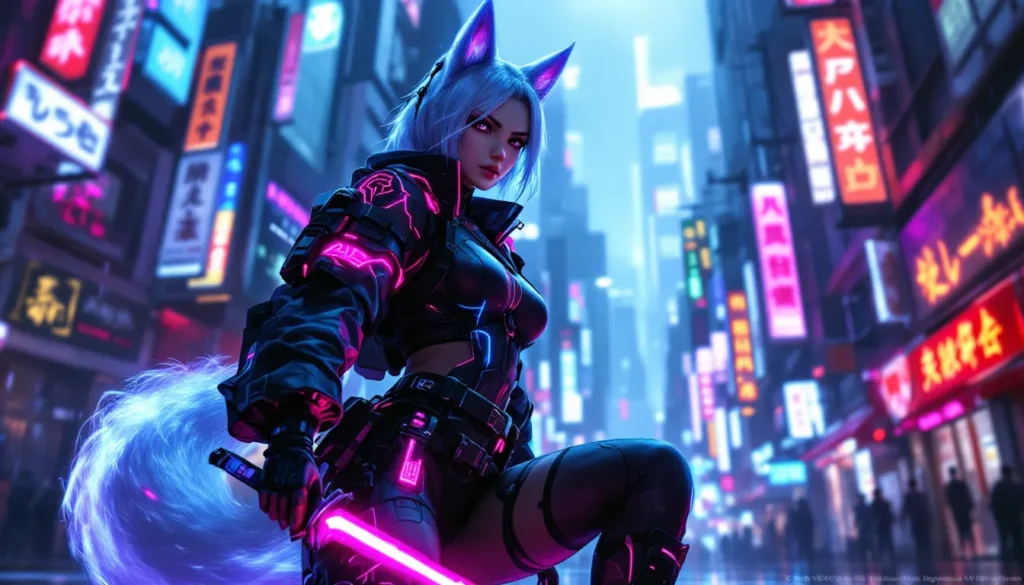
Kitsune hails from the neon-lit streets of Hanamachi, a fictional district in Kyoto that blends traditional Japanese aesthetics with cyberpunk tech. According to official lore, Kitsune was once a corporate espionage agent who turned vigilante after her employer, the Shimada-adjacent Kanezaka Syndicate, betrayed her team. She now operates as a freelance operative, sometimes crossing paths with Genji and Hanzo during missions that blur the line between justice and revenge.
Her design draws heavily from kitsune folklore, nine-tailed fox spirits known for their cunning and shape-shifting abilities. Blizzard’s art team incorporated holographic tail projections that shift colors based on her current ability cooldowns, giving opponents visual cues while maintaining her sleek, agile silhouette. Voice actor Rina Takeda brings a confident, slightly sarcastic tone that fits Kitsune’s lone-wolf personality.
Lore enthusiasts will appreciate the environmental storytelling: Kitsune’s spawn room interactions with Kiriko hint at a mentor-student dynamic, and her rivalry with Widowmaker stems from a failed assassination contract that left scars on both sides.
Role and Class Overview
Kitsune is classified as a Damage hero with a sub-designation as a flanker. Her kit emphasizes vertical mobility, burst damage, and quick escapes, think Tracer’s harassment potential mixed with Genji’s verticality but with less reliance on raw mechanical aim.
Unlike hitscan DPS like Soldier: 76 or Cassidy, Kitsune excels at close-to-mid range engagements where her projectile-based attacks and movement abilities shine. She struggles in long sightlines against competent snipers, and her relatively low health pool (225 HP) means positioning errors are punished hard. Players comfortable with heroes like Sombra or Echo will find Kitsune’s playstyle familiar, though her skill floor is notably higher, expect to die a lot during your first few hours.
In the current DPS meta, Kitsune offers something the role desperately needed: a non-ult-dependent flanker who can pressure supports without relying on perfect aim. She won’t replace Tracer in the hands of OWL pros, but for the average Diamond player, she’s far more forgiving while still rewarding game sense and timing.
Complete Ability Breakdown
Understanding Kitsune’s kit is critical, each ability flows into the next, and wasting cooldowns leaves you vulnerable. Here’s the full breakdown with exact numbers from the Season 14 patch notes.
Primary Weapon and Attack Mechanics
Spectral Kunai is Kitsune’s primary weapon, a semi-automatic projectile launcher that fires glowing kunai at 2 rounds per second. Each kunai deals 60 damage on direct hit with no falloff, and they travel at moderate speed, faster than Genji’s shurikens but slower than Hanzo’s arrows.
The weapon holds 12 kunai per magazine with a 1.5-second reload. Crucially, landing headshots deals 120 damage, making her a serious threat to 200 HP squishies if your aim is on point. The projectiles have a slight hitbox, more forgiving than Hanzo but less generous than pre-nerf Mei.
Kitsune’s primary fire rewards tracking and prediction rather than flick shots. Against strafing targets, lead your shots slightly and aim for upper chest to catch head hitbox when they crouch or jump. In close quarters, hipfire is accurate enough: save the ADS-style focus (which she lacks) for other heroes.
Ability 1: Detailed Analysis
Phantom Dash (Cooldown: 6 seconds) is Kitsune’s bread-and-butter mobility tool. Activate it to dash forward 12 meters in whatever direction you’re moving, phasing through enemies and becoming briefly untargetable for 0.4 seconds during the dash.
This ability has ridiculous skill ceiling. You can:
- Dash through barriers and shields (yes, even Rein’s)
- Dodge ultimates mid-animation (Graviton, Blizzard, Pulse Bomb)
- Reset your position vertically if you dash while airborne at an angle
- Cancel certain CC effects if timed perfectly
The 6-second cooldown is short enough to use aggressively for engagement, but experienced players save it for escapes. Early on, you’ll burn Phantom Dash to close distance, land two kunai, then die because you have no out. Discipline is everything.
One trick the pros are already abusing: dash through an enemy toward your team, forcing them to turn 180° and exposing their back to your teammates. It’s basically a mini-Sombra hack in terms of creating chaos. Understanding Overwatch 2 Tank matchups helps you decide when to dash aggressively versus holding it defensively.
Ability 2: Detailed Analysis
Spirit Mark (Cooldown: 10 seconds) is Kitsune’s utility ability. Fire a spectral tag at an enemy within 20 meters. If it lands, that enemy is marked for 4 seconds, visible through walls to your entire team. While marked, that enemy takes 15% increased damage from all sources.
This ability is absurdly strong in coordinated play and borderline wasted in solo queue. The damage amp stacks multiplicatively with Mercy’s blue beam, Ana’s nano, and Orisa’s ult, letting your team delete tanks in seconds. The wallhack component means marked targets can’t hide around corners or retreat safely.
Optimal usage:
- Mark high-value targets like enemy supports before your team dives
- Tag flankers harassing your backline so your supports can peel
- Use it on enemy DPS right before they ult (marked Genji trying to blade becomes free ult charge)
The projectile has a small hitbox and moderate travel time, so it’s not guaranteed to land. Missing it is punishing, 10 seconds is forever in a teamfight. Practice leading targets in the practice range, and prioritize larger hitboxes (tanks) if you’re still learning the timing.
Passive Ability Explained
Fox Fire is Kitsune’s passive and one of the most interesting additions to Overwatch 2 new characters. After dealing damage, Kitsune gains a stacking movement speed buff: 2% per 50 damage dealt, up to 10% maximum (250 damage). The buff decays at 1% per second when not dealing damage.
This creates a snowball effect. Land your shots consistently, and you become harder to hit while chasing down low-health targets. Miss your shots, and you’re just a 225 HP flanker with no sustain.
The passive synergizes with her entire kit:
- Faster movement lets you close gaps without burning Phantom Dash
- You can kite enemies while maintaining DPS uptime
- Escaping is easier when you’ve already built stacks before disengaging
Weapon swapping, reloading, and using abilities don’t pause the decay, only damage refreshes and builds stacks. This means prolonged poke is rewarded, but you can’t maintain max stacks while hiding or repositioning. It’s high-maintenance but powerful in skilled hands.
Ultimate Ability: How to Maximize Impact
Twilight Rend (Cost: 2100 points) is Kitsune’s ultimate, a devastating area-denial and burst damage tool. Upon activation, Kitsune slashes in a wide arc (10-meter range, 120° cone), dealing 150 damage instantly to all enemies hit. Hit enemies are also knocked back slightly and suffer a 30% slow for 2 seconds.
The ult charges relatively slowly, expect it every 2.5 to 3 teamfights with decent accuracy. It’s not a fight-winning ult like Grav or Blade, but it’s a strong tool for:
- Executing low-health targets trying to retreat
- Peeling for your supports against dive (slash the Winston or Doomfist mid-engagement)
- Disrupting enemy positioning during choke pushes
- Finishing targets your team has already damaged
Twilight Rend can’t headshot, and the damage is reduced by armor. Against a nano’d Reinhardt with armor packs, you’re looking at maybe 90 damage, annoying but not lethal.
Timing is everything. Bad Kitsune players pop ult and whiff because enemies just walk backward out of range. Good players combo it:
- Phantom Dash into the enemy backline, ult immediately to catch supports off-guard
- Wait for enemy movement abilities to be on cooldown (no Tracer recall, no Moira fade)
- Combo with allied CC (Rein shatter, Sigma rock, Ana sleep) so enemies can’t dodge
Many players on IGN noted that Twilight Rend feels underwhelming in lower ranks where target prioritization is poor, but in Masters+, it’s a support-deletion tool that forces defensive ults.
Playstyle and Strategy Tips
Kitsune isn’t a hero you can autopilot. She demands active decision-making, map knowledge, and teamfight awareness. Here’s how to actually play her effectively instead of feeding ult charge.
Optimal Positioning and Movement
Kitsune thrives on off-angles and high ground. Don’t brawl in the main choke with your tanks, you’ll get melted. Instead, take flanking routes that let you harass the enemy backline or pressure their DPS from unexpected angles.
Key positioning rules:
- Stay within 15-20 meters of your target (optimal kunai accuracy range)
- Always have an escape route planned before engaging
- Use Phantom Dash to reposition vertically onto ledges enemies can’t easily follow
- Don’t commit deep unless Spirit Mark is available and your team is ready to follow up
Map-specific tips:
- Illios Ruins: Use the mega health pack room as your staging ground: dash through point to pick supports, then retreat
- King’s Row streets phase: High ground on the left (attacker POV) lets you spam kunai at supports while staying safe from tanks
- Dorado final point: The narrow corridors limit your mobility: play more cautiously and focus on peeling for your own supports
Movement is survival. Keep strafing unpredictably, mix crouches into your duels, and abuse verticality whenever possible. Standing still to “aim better” just makes you easy food for enemy hitscan. The healing strategies that keep you alive depend on you not overextending beyond your supports’ sightlines.
Best Team Compositions and Synergies
Kitsune works best in dive compositions or split-pressure comps where multiple threats force the enemy to choose who to peel for. She’s awkward in bunker/poke comps because she can’t contribute much at range.
Strong tank pairings:
- Winston: Dive together, mark his target, secure kills
- Doomfist: Similar engage timings: your Spirit Mark amplifies his burst
- Wrecking Ball: Both create chaos: enemies can’t track two flankers and a Ball simultaneously
DPS synergies:
- Tracer: Double flanker comp: enemy supports can’t peel against both
- Genji: Mark targets before he blades for guaranteed kills
- Sombra: Hack + Spirit Mark = deleted supports
Support synergies:
- Kiriko: Her teleport can bring you back to safety: her invulnerability saves you from bad engagements
- Brigitte: Armor packs on a flanker are absurdly strong: you become a 275 HP nightmare
- Zenyatta: Discord + Spirit Mark + your damage = even tanks evaporate
Avoiding comps where you’re the only dive threat is smart. If your team runs Rein-Zarya with Torb-Symmetra, you’re forced into awkward 1v5 flanks that’ll get you flamed in chat. Communicate your hero pick and adapt if the comp doesn’t support your playstyle.
Countering Enemy Heroes
Kitsune excels at punishing immobile supports and out-of-position DPS. Here’s who you should target and who you should avoid.
Easy targets:
- Zenyatta: No mobility, predictable movement: free kill if you land Spirit Mark
- Ana: Threatening if she lands sleep, but if you bait it or dodge with Phantom Dash, she’s helpless
- Widowmaker: Close the gap with Phantom Dash: her low HP and weak close-range DPS make her vulnerable
- Ashe: Similar to Widow: get in her face and she’s forced to use Coach Gun defensively
Skill matchups:
- Baptiste: Immortality Field counters your burst: wait for it to be used, then engage
- Cassidy: Flashbang is gone, but his high burst damage at mid-range can outduel you
- Genji: Mirror matchup: whoever lands more headshots and manages cooldowns better wins
Avoid these heroes:
- Brigitte: Her armor, stun, and self-heal make her nearly impossible to solo kill
- Torbjörn: Turret locks you down: overload gives him too much HP
- Moira: Fade lets her escape Spirit Mark: her lock-on beam is annoying when you’re trying to aim kunai
- Symmetra: Turrets reveal your flank routes and slow you: her beam ramps damage faster than you can kill her
When facing comps with multiple counters, play less aggressively and focus on peeling for your own team. Sometimes the best play is recognizing when Kitsune isn’t the right pick for the match.
How to Counter the New Hero
If you’re on the receiving end of a good Kitsune player, it’s miserable. But she has exploitable weaknesses, here’s how to shut her down.
Best Hero Picks Against the New Addition
Certain heroes make Kitsune’s life hell. Instalocking these forces her to play ultra-safe or swap.
Hard counters:
- Moira: Fade removes Spirit Mark, her lock-on beam requires no aim (Kitsune’s mobility means nothing), and Coalescence zones her out of fights
- Winston: His cleave damage and bubble dance make dueling him impossible: he can also dive her before she dives your supports
- Brigitte: Armor packs deny your burst, her stun stops Phantom Dash mid-animation, and she outheals your DPS in close range
- Symmetra: Turrets slow and reveal her, and her beam out-damages Kitsune at close range while requiring less aim
Soft counters:
- Cassidy: Magnetic Grenade provides burst damage Kitsune struggles to avoid: his mid-range hitscan is more reliable than her projectiles
- Mei: Slows shut down her mobility advantage: wall cuts off escape routes
- Roadhog: Hook is a death sentence if Kitsune mistimes Phantom Dash: his self-heal negates her poke damage
- Torbjörn: Turret provides free information on flank routes and forces her to waste cooldowns avoiding it
Team compositions heavy on lock-on abilities and area denial crush Kitsune. If you’re running Moira-Brig-Sym-Torb-Winston, she literally cannot play the game. Coordination is key, though, split teams still get picked off by Spirit Mark focus fire. If you’re struggling with tank matchups, swapping to Winston specifically to counter Kitsune is often worth it.
Tactical Approaches and Weaknesses to Exploit
Even without hard-counter heroes, smart tactics shut down Kitsune.
Exploit her cooldown windows: Kitsune with Phantom Dash on cooldown is a free kill. Bait the dash with a fake engage, then collapse when she’s immobile. Tracking her ability usage is critical, most Kitsune players use Phantom Dash predictably (always to engage, never to escape).
Punish her low HP pool: 225 HP means any burst combo deletes her. Hog hook, Hanzo storm arrows, Cassidy nade + headshot, Widow bodyshot + teammate tap, she dies before she can react. Focus fire is devastating against her.
Deny flank routes: Kitsune relies on off-angles. Ward common flank paths with Torb turrets, Sym turrets, or just position a support to have sightlines on side routes. If she’s forced to take the main path, she’s not threatening.
Use sound cues: Kitsune’s Phantom Dash has a distinct audio cue (a short fox yip sound). The moment you hear it, call out her position. Spirit Mark’s projectile also has a glowing trail, if you see it, that target is being focused. Peel immediately.
Save mobility cooldowns: If you’re a support, hold your escape ability when you know enemy Kitsune has ult or hasn’t engaged yet. Ana keeping nade for herself instead of using it on tanks, Kiriko saving teleport, Mercy keeping GA available, these habits keep you alive.
Force her into bad trades: If Kitsune burns Spirit Mark and Phantom Dash but doesn’t get a kill, she’s useless for 10+ seconds. Make her work for every pick by playing near teammates and utilizing cover. Solo targets are her win condition: grouped targets are her nightmare.
Community resources like Dot Esports have already published counter guides emphasizing that Kitsune is strongest in chaotic, disorganized fights. Disciplined teams that group, call out her position, and peel for each other drastically reduce her effectiveness.
Meta Impact and Competitive Viability
Every new Overwatch character shifts the meta, but not all shake it up equally. So where does Kitsune sit in the current landscape?
Current Meta Positioning
As of mid-Season 14 (March 2026), the Overwatch meta right now heavily favors dive and split-pressure compositions, especially at higher ranks. Kitsune slots neatly into this environment, offering consistent backline pressure without relying on perfect mechanics.
Ranked ladder (Diamond-Masters): Kitsune is seeing a 9-11% pick rate across these ranks, with a slightly negative win rate (48-49%) in her first two weeks. This is expected, new heroes always have depressed win rates as players learn optimal strategies. One-tricks and early adopters are pushing her into games where she doesn’t fit, dragging down the average.
Grandmaster/Top 500: Pick rate drops to 6-7%, but win rate climbs to 51-52%. High-level players are more selective about when to run her, and their mechanical skill makes her harder to punish. She’s a niche pick, not a must-pick.
Competitive/OWL scrim environment: Early reports suggest she’s being tested in dive comps as a Tracer alternative on maps with abundant vertical space (Illios, Lijiang, Nepal). Her Spirit Mark provides value even if she doesn’t frag out, which makes her attractive in coordinated play. But, she’s not displacing established meta heroes like Tracer, Genji, or Soldier: 76.
Map-specific viability: Kitsune thrives on control maps with multiple flank routes and verticality. She struggles on payload maps with long sightlines (Junkertown, Havana) and escort phases where the team needs sustained damage rather than burst picks.
Compared to the original Overwatch heroes like Tracer, McCree, and Genji who defined flanker DPS, Kitsune offers more utility (Spirit Mark) but less raw carry potential. She’s not going to 1v9 like a god-tier Tracer, but she makes your whole team more effective.
Professional Player and Community Reactions
The community is split, as always. Let’s break down what high-level players and content creators are saying.
Positive reactions:
- Flats (Tank main, former pro) praised Spirit Mark as “exactly the kind of utility DPS needs to justify their role in a 5v5 format.”
- ML7 (Support streamer) noted that Kitsune is “annoying to play against but not oppressive,” which is the sweet spot for balance.
- Kragie (DPS player) highlighted her skill ceiling: “Bad Kitsune players feed. Good ones are invisible but win you fights.”
Negative reactions:
- Samito (DPS streamer) called her “a worse Tracer with a gimmick,” arguing that in any scenario where Kitsune is good, Tracer is better.
- Casual players on Reddit and official forums complain about her “overloaded kit,” specifically the combination of mobility, utility, and burst damage, though this is standard for modern hero design.
- Some pros note her lack of defensive utility (no shields, heals, or damage mitigation) makes her a selfish pick in comps that need more team support.
Balance concerns: As of the Season 14 launch patch, Blizzard hasn’t announced any immediate balance changes. But, if her win rate climbs above 52% in Masters+ after players optimize her, expect nerfs to Spirit Mark duration or Phantom Dash cooldown. Conversely, if she stays sub-50% across all ranks, buffs to her HP or kunai damage are likely.
Compared to recent Overwatch 2 new characters like Ramattra (overtuned on release) and Lifeweaver (undertuned for months), Kitsune feels relatively balanced. She’s strong in the right hands but not brain-dead easy or oppressively broken. How many heroes in Overwatch can genuinely claim that at launch?
Community sentiment on The Loadout and similar outlets suggests players appreciate that Kitsune rewards skill expression rather than just existing and winning (looking at you, release Brigitte).
Unlocking and Availability Details
Blizzard’s unlock model for new heroes in Overwatch 2 follows the same structure introduced with Kiriko. Here’s exactly what you need to do to add Kitsune to your roster.
How to Unlock the New Hero
Kitsune is available through two paths: the Battle Pass or by completing hero challenges after the season ends.
Battle Pass unlock (immediate access):
- Purchase the Premium Battle Pass for 1,000 Overwatch Coins (~$10 USD)
- Kitsune is unlocked at Tier 1 instantly upon purchase
- You also get access to exclusive skins, sprays, and other cosmetics tied to the premium track
This is the fastest method and the one Blizzard clearly incentivizes. For competitive players who want to learn her ASAP or just don’t want to grind, it’s worth the cost. Coins can be earned slowly through weekly challenges (60 coins/week), so technically you can save up over several seasons without spending real money, but it takes months.
Free track unlock (delayed access):
- Kitsune becomes available on the free Battle Pass track after Season 14 ends (approximately 9 weeks from launch)
- Players who didn’t buy the premium pass can unlock her through hero challenges
- These challenges typically require winning matches across multiple roles and completing objectives (win 20 games, deal X damage, etc.)
- Expect the challenge grind to take 10-15 hours of playtime for average players
If you’re returning after a long break, any heroes you missed from previous seasons (like Kiriko, Ramattra, or Junker Queen) are also unlockable via hero challenges. This means new players aren’t permanently locked out of heroes but do face a content disadvantage in their first weeks.
Platform availability: Kitsune is available on **PC (Battle.net, Steam), PlayStation 5, PlayStation 4, Xbox Series X
|
S, Xbox One, and Nintendo Switch**. Cross-progression is enabled, so unlocking her on one platform unlocks her across all platforms tied to your Battle.net account.
Battle Pass and Free Track Options
The Season 14 Battle Pass contains 80 tiers of rewards. Here’s what’s relevant to Kitsune:
Premium track highlights:
- Tier 1: Kitsune (hero unlock)
- Tier 20: “Neon Yokai” legendary skin (Kitsune)
- Tier 50: “Spirit Walker” epic skin (Kitsune)
- Tier 80: Mythic-tier “Nine-Tailed Empress” skin (Kitsune with customizable tail colors and effects)
Free track highlights:
- Tier 35: “Street Ronin” rare skin (Kitsune)
- Tier 55: Kitsune-themed weapon charm
- Various voice lines, sprays, and player icons scattered throughout
The Mythic skin at Tier 80 requires significant grinding, expect 80-100 hours of playtime to reach it without purchasing tier skips. It’s gorgeous and has unique animations (her holographic tails shift from blue to red during ult), but it’s purely cosmetic.
Weekly challenges award bonus XP and accelerate Battle Pass progression. Completing all weekly challenges can shave 15-20 hours off the grind. Pro tip: stack challenge requirements by playing modes where multiple challenges can be completed simultaneously (e.g., “win games in Role Queue” + “deal X damage as DPS”).
Skins, Cosmetics, and Customization
Kitsune launched with a solid cosmetic lineup, including some genuinely impressive legendary skins. Here’s the full rundown.
Launch Skins and Legendary Options
Kitsune has seven skins available at launch, spanning multiple rarity tiers.
Legendary skins (1,900 credits or Battle Pass unlock):
-
Neon Yokai (Tier 20 Premium): Cyberpunk aesthetic with glowing circuit patterns on her jacket and neon-pink holographic tails. Her kunai leave pixel trails. This is the standout launch skin and already a fan favorite.
-
Oni Huntress (Shop exclusive): Traditional oni mask with crimson and black armor, more grounded and less futuristic. Her tails are rendered as spectral flames instead of holograms. Available for direct purchase during launch week, then rotates into the shop randomly.
Epic skins (1,000 credits or Battle Pass unlock):
-
Spirit Walker (Tier 50 Premium): Woodland theme with earthy greens and browns, nature-inspired tail effects (leaves instead of tech).
-
Twilight Assassin (Launch bundle): Dark purples and blues, stealthy vibe. Bundled with a player icon and victory pose for 1,500 credits.
Rare skins (300 credits or free track unlock):
- Street Ronin (Tier 35 Free): Simple recolor with urban camo jacket.
6-7. Azure Fox and Crimson Fox (Credits only): Basic palette swaps, nothing special.
All legendary and epic skins include unique weapon models, but only legendaries change her holographic tail appearance. Rare skins are straight recolors with no model changes.
For players curious about skin collections, Kitsune’s launch offerings are generous compared to recent heroes. Lifeweaver had only three skins at launch: Kitsune shipped with seven plus a Mythic.
Voice Lines, Emotes, and Highlights
Kitsune’s cosmetic depth extends beyond skins. She launched with 12 voice lines, 4 emotes, and 3 highlight intros.
Standout voice lines:
- “Nine lives, one mission.” (Edgy but fitting her lore)
- “Trust is a luxury I can’t afford.” (Pre-match line, plays automatically)
- “Outplayed and outfoxed.” (Elimination callout)
- “Was that supposed to hurt?” (Sarcastic taunt)
Emotes:
- “Tail Flourish” (Legendary, 750 credits): Her tails fan out in a circular display while she strikes a pose
- “Kunai Juggle” (Epic, 500 credits): She tosses three kunai in the air and catches them
- “Sit” (Common, free): Standard sitting animation
- “Stretch” (Common, free): Quick warmup stretch
The Tail Flourish emote is already being used for BM after team wipes. Expect to see it spammed in competitive.
Highlight intros:
- “Phantom Strike” (Legendary, 750 credits): Camera follows her mid-Phantom Dash as she phases through a barrier, lands, and hurls a kunai at the camera
- “Shadow Step” (Epic, 500 credits): She drops from above, lands in a crouch, and her tails flare out
- “Calculated” (Rare, 200 credits): She twirls a kunai on her finger before catching it
Phantom Strike is the must-have. The camera work is smooth, and it looks clean in POTGs.
Unlocking cosmetics: Most cosmetics are purchased with credits earned through gameplay or bought with real money. Loot boxes are gone (since Overwatch 2’s launch), so you can’t gamble for items anymore, everything is direct purchase or Battle Pass unlock. This is better for long-term value but more expensive short-term if you want everything immediately.
Community Reception and Early Impressions
Two weeks post-launch, the community’s take on Kitsune is clearer. Spoiler: it’s mixed, but that’s healthier than universal praise or hatred.
What players love:
- High skill ceiling: She rewards game sense, ability management, and mechanical skill without feeling impossible to learn. Casual players can have fun: sweats can optimize her to insane levels.
- Satisfying mobility: Phantom Dash feels incredible. It’s responsive, versatile, and looks cool. This alone makes her fun to play even when you’re losing.
- Lore integration: Her character design, personality, and interactions feel authentic to the Overwatch universe. She’s not a random addition: she fits.
- Balanced launch: Unlike past heroes (Brigitte meta, anyone?), Kitsune didn’t immediately warp the game. She’s strong but not oppressive.
What players dislike:
- Punishing for solo queue: Spirit Mark requires coordination to maximize. In solo queue, teammates often ignore marked targets, making her feel underwhelming.
- Inconsistent projectile hitboxes: Some players report kunai “ghosting” through enemies at close range, though Blizzard hasn’t confirmed if this is netcode or intentional hitbox design.
- Another DPS in a role-bloated category: Damage already has 18 heroes. Tanks have 10, supports have 8. Players are begging for more support heroes, not another flanker.
- Battle Pass lock: Free players can’t access her until Season 14 ends, which fragments the playerbase and creates knowledge gaps (players don’t know how to counter her if they can’t practice her).
Sentiment across skill brackets:
- Bronze-Platinum: She’s seen as “hard to play, easy to feed on.” Lower-ranked players struggle with cooldown management and positioning, leading to frustration.
- Diamond-Masters: Opinions are positive. She’s a strong, skill-expressive hero who fits the current meta without being mandatory.
- GM/Top 500: Cautiously optimistic. Pros acknowledge her potential but note she’s not displacing meta staples. She’s a tool, not a crutch.
Content creator meta: YouTube and Twitch are flooded with “KITSUNE IS BROKEN” thumbnails, but actual gameplay footage shows balanced performance. Clickbait aside, most creators agree she’s in a good spot.
Compared to when Overwatch 2 Reaper received his recent rework, community reception for Kitsune is far less polarized. Nobody’s calling for immediate nerfs or buffs, which suggests Blizzard nailed the balance.
One recurring question: when does the new Overwatch season start next? Season 15 is slated for mid-June 2026, roughly 9 weeks after Season 14’s launch. If Kitsune’s pick and win rates remain stable, expect minimal changes. If she breaks 54%+ win rate in any rank, nerfs are coming.
Conclusion
Kitsune is exactly what Overwatch 2 needed: a high-skill flanker with utility that doesn’t feel like a retread of existing heroes. She’s not going to replace Tracer or Genji in the hands of OWL gods, but for the average player looking to climb ranked or just have fun in quick play, she’s a blast.
Her kit rewards smart aggression, punishes poor positioning, and creates opportunities for coordinated teams. She’s weak in disorganized solo queue and against hard counters like Moira or Brigitte, but that’s healthy design, no hero should dominate every scenario.
Whether you’re unlocking her through the Battle Pass or waiting for the free track, invest time learning her cooldowns, practicing kunai accuracy, and studying when to engage versus when to peel. She’s not a plug-and-play hero, but the payoff for mastering her is absolutely worth it.
Now get out there and start fragging.