
Table of Contents
ToggleFor years, the Overwatch community has rallied around one seemingly impossible dream: a cat with a jetpack. What started as concept art and developer jokes has snowballed into one of the most persistent hero requests in the game’s history. Now, in 2026, rumors are swirling harder than ever that Jetpack Cat might actually become playable. Whether you’re a veteran who’s been tracking every BlizzCon tease or a newer player wondering what the hype is about, this is your complete guide to the phenomenon that refuses to die. From its meme origins to the latest Blizzard statements, we’re breaking down everything known, and speculated, about the overwatch jetpack cat that’s captured hearts across every rank.
Key Takeaways
- Jetpack Cat, a feline hero with propulsion systems originally shelved during Overwatch’s early development, has transformed from developer joke to the most persistent hero request in the community’s history.
- Blizzard’s recent shift in tone—from flat denials to ‘we’ll see’—combined with datamined files labeled ‘Hero_37_Feline’ and playful cat references suggest Jetpack Cat may finally become playable in Summer or Fall 2026.
- Jetpack Cat is most likely to be designed as a mobility-focused Support hero that combines Mercy’s repositioning with aggressive positioning capabilities, filling a critical gap in Overwatch 2’s support roster.
- The overwatch cat concept demonstrates how sustained community campaigns, fan art, theorycrafting, and organized hashtag movements can influence developer decisions and shape hero roster priorities.
- Preparing for Jetpack Cat’s potential release involves mastering current mobility heroes like Mercy, Lucio, and Echo, learning key map positions, and understanding how to counter fast-moving threats in competitive play.
What Is Jetpack Cat in Overwatch?
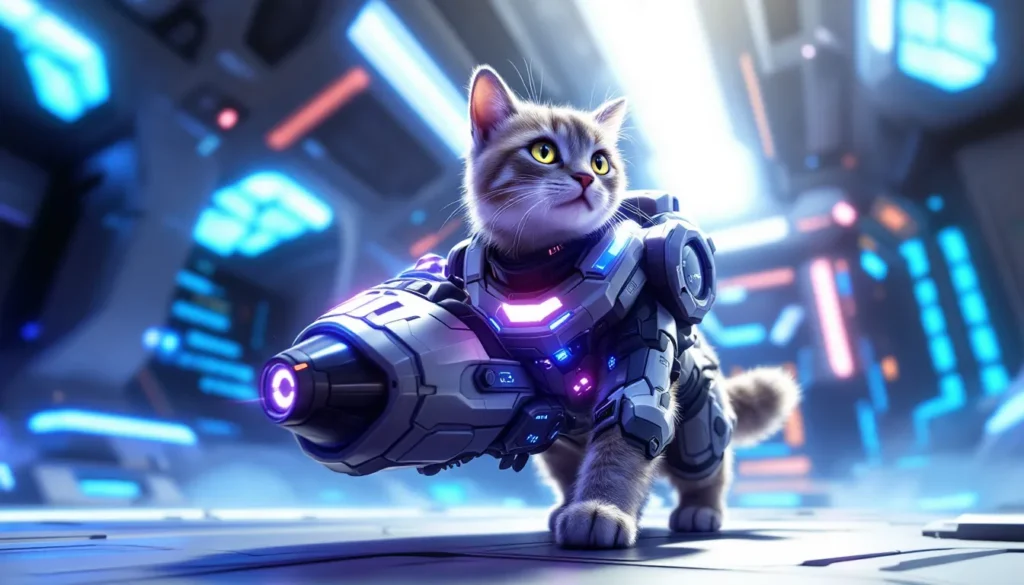
Jetpack Cat is exactly what it sounds like: a feline hero equipped with a jetpack, originally conceived during Overwatch’s early development. The concept has never made it into the live game, but it’s remained a fan-favorite idea that refuses to fade from community consciousness. Unlike fully realized heroes, Jetpack Cat exists in a strange limbo between concept art, developer commentary, and pure community imagination.
The overwatch cat isn’t tied to any specific in-game lore yet, which has only fueled speculation about how it could fit into the game’s universe. Some fans theorize it could be Hammond’s (Wrecking Ball’s) companion from Horizon Lunar Colony. Others imagine it as a standalone hero with its own backstory. Without official confirmation, Jetpack Cat has become a blank canvas for player creativity.
The Origin Story Behind Jetpack Cat
Jetpack Cat’s roots trace back to Overwatch’s pre-launch development phase. Former game director Jeff Kaplan mentioned the concept in a developer update years ago, explaining that the team had experimented with a hero that was literally a cat with a jetpack. The idea was shelved because the team struggled to make it work thematically and mechanically within Overwatch’s relatively grounded sci-fi aesthetic.
Kaplan’s casual mention turned what could’ve been forgotten concept art into a rallying cry. The image of a cat soaring through the air, jetpack strapped to its back, resonated with players on a level that more “serious” hero designs couldn’t match. It represented Overwatch’s playful side, the game that gave us a hamster in a mech ball and a DJ who heals with bass drops.
The timing mattered too. Overwatch was still building its roster, and players were hungry for unconventional hero designs. Jetpack Cat became shorthand for creative risk-taking, a symbol that Blizzard shouldn’t play it safe.
From Meme to Potential Reality
What kept Jetpack Cat alive wasn’t just nostalgia, it was sustained community effort. Reddit threads, fan art, and Twitter campaigns kept the concept circulating year after year. Whenever Blizzard announced a new hero, the inevitable “but where’s Jetpack Cat?” comments would flood social media.
The shift from meme to potential reality accelerated in 2024-2025. Overwatch 2’s evolving roster philosophy has embraced weirder hero concepts. With the game’s 5v5 format and reworked role queue, Blizzard has more design space to experiment. Heroes like Ramattra and Lifeweaver showed the team’s willingness to push mechanical boundaries.
By early 2026, industry insiders began hinting that Blizzard was seriously reconsidering shelved concepts. Dataminers found audio files with feline-adjacent sound effects in recent patches, though nothing conclusive. The community’s years-long campaign might finally be paying off, or we’re all collectively buying into the most elaborate troll in Overwatch history.
How Jetpack Cat Became a Community Icon
Jetpack Cat’s ascension from throwaway concept to community legend didn’t happen overnight. It required the perfect storm of developer transparency, fan creativity, and impeccable meme timing. Understanding how a scrapped idea became an icon tells you everything about Overwatch’s unique player culture.
Early Concept Art and Developer Teases
The earliest concept art of Jetpack Cat surfaced around 2016-2017, showing rough sketches of a cat with mechanical propulsion systems. These weren’t polished hero designs, more like napkin doodles exploring “what if?” scenarios. The art style was consistent with other Overwatch pre-production materials, lending credibility to its origins.
Jeff Kaplan’s developer updates became the primary source of Jetpack Cat lore. He’d occasionally reference the concept when discussing hero design philosophy, always with a knowing smile that suggested he understood the community’s obsession. These weren’t official teases in the traditional sense, but they kept the conversation alive within official channels.
Other Blizzard developers joined in over the years. Concept artists would post throwback sketches during anniversary events. Voice actors would joke about auditioning for “meow lines.” These breadcrumbs never amounted to concrete promises, but they signaled that Jetpack Cat hadn’t been completely forgotten internally.
The most significant tease came at BlizzCon 2023, when a brief animation during the hero showcase montage featured a cat silhouette with glowing thrusters. The crowd erupted. Blizzard never officially commented on whether it was deliberate or just clever editing, which only intensified speculation.
Fan Campaigns and Community Demand
What separates Jetpack Cat from other forgotten concepts is the organized, relentless community push. Multiple Change.org petitions have collectively gathered hundreds of thousands of signatures demanding its inclusion. Fan artists have created hundreds of skin concepts, ability mockups, and even full 3D models.
The “#JetpackCatOrRiot” hashtag trends annually around BlizzCon and major Overwatch announcements. Streamers dedicate broadcasts to discussing potential Jetpack Cat kits. Content creators have built entire video series around the mythology.
What’s fascinating is how the campaign evolved beyond simple requests. Fans started framing Jetpack Cat as a test of Blizzard’s willingness to take risks. In a post-Overwatch 2 landscape where some players felt the sequel played it safe, Jetpack Cat represented bold, unapologetic creativity. The Overwatch Archives community has extensively documented every hint and rumor.
Community-run polls consistently show Jetpack Cat as a top-3 most-wanted hero, competing with more “serious” concepts like a Canadian hockey player or another support hero. The joke became a genuine desire, and that desire became a movement.
Predicted Abilities and Hero Kit for Jetpack Cat
Since Blizzard hasn’t confirmed Jetpack Cat’s kit, the community has done the work for them. Hundreds of fan concepts exist, but certain ideas appear consistently across proposals. Based on Overwatch’s design patterns and what would make a jetpack-equipped cat both fun and balanced, here’s what seems most likely.
Expected Role and Playstyle
Most community predictions place Jetpack Cat in the Support or Damage role, with Support being the stronger bet. Overwatch 2’s support roster desperately needs more mobility-focused options. Currently, supports like Mercy and Lucio dominate when teams need vertical mobility. Jetpack Cat could fill that niche with a more aggressive, harassment-focused support playstyle.
Imagine a support that plays like a cross between Mercy’s mobility and Baptiste’s damage output. Jetpack Cat would excel at reaching isolated teammates, contesting high ground, and disrupting enemy backlines. The playstyle would reward mechanical skill, quick jetpack bursts to dodge damage, precise positioning to maximize healing or damage output.
If designed as Damage, Jetpack Cat would likely be a flanker with hit-and-run tactics. Think Tracer’s harassment potential combined with Echo’s vertical access. The jetpack would enable unpredictable angles of attack, making Jetpack Cat a nightmare for enemy supports and snipers.
The kit would need strict resource management to avoid being oppressive. A fuel meter for the jetpack, similar to D.Va’s boosters or Pharah’s hover jets, would create meaningful decision points. Burn fuel for aggressive plays, or conserve it for escape routes?
Potential Ultimate Ability and Special Mechanics
Ultimates in Overwatch define hero identity, so Jetpack Cat’s would need to be memorable. One popular community concept: “Nine Lives” – an ultimate that revives recently eliminated teammates or provides temporary invulnerability to allies in a radius. It would fit the cat theme while addressing Overwatch 2’s lack of resurrection mechanics since Mercy’s ult rework.
Another strong possibility: “Aerial Bombardment” – Jetpack Cat flies rapidly around the map, deploying healing or damage payloads at marked locations. Players would pre-target areas before activation, then watch as Jetpack Cat executes an automated flight path. It would reward strategic planning over mechanical execution.
A more chaotic option: “Feline Frenzy” – unlimited jetpack fuel and enhanced speed for a duration, allowing Jetpack Cat to become an unkillable harassment machine. Balanced by dealing reduced damage during the ult, forcing players to choose between kills and creating maximum disruption.
Special mechanics could include wall-climbing (standard for cats), a pounce attack with leap distance affected by fuel reserves, or a purr-based passive that slowly heals nearby allies. The competitive meta analysis community has extensively theorycrafted these possibilities.
How Jetpack Cat Could Fit Into the Current Meta
The Season 9 (March 2026) meta favors dive compositions and vertical mobility. Maps like Numbani, Gibraltar, and Dorado reward heroes who can quickly access high ground. Jetpack Cat would slot perfectly into dive comps alongside Winston, D.Va, Tracer, and Genji.
Against the current support meta dominated by Ana and Kiriko, Jetpack Cat’s mobility would be its survival mechanism. Anti-nade and one-shot combos punish immobile supports, but a hero that’s constantly repositioning would force opponents to burn cooldowns predicting movement.
In terms of counters, expect Cassidy’s Magnetic Grenade and Sombra’s hack to be particularly effective. Any hero with CC or mobility denial would naturally counter a jetpack-reliant hero. Widowmaker and Hanzo could also punish predictable flight patterns, similar to how they counter Pharah.
The addition could also shake up support duos. Pairing Jetpack Cat with a defensive support like Baptiste or Moira would create interesting dynamics, one holds ground while the other contests angles. Or double-mobility supports (Jetpack Cat + Lucio) could enable hyper-aggressive speedrun strategies.
Latest News and Updates on Jetpack Cat Release
As of March 2026, Blizzard’s stance on Jetpack Cat remains officially noncommittal, but the signals have never been stronger. Datamines, developer comments, and community insider reports suggest something’s brewing, though whether it’s Jetpack Cat specifically or just fan wishful thinking remains unclear.
Official Statements from Blizzard in 2026
In a February 2026 developer livestream, current Overwatch 2 Game Director Aaron Keller addressed Jetpack Cat directly for the first time in years. When asked about fan-favorite concepts, he said: “We’ve learned that sometimes the ideas that seem too wild end up being the most beloved. We’re not ruling anything out.” He didn’t confirm Jetpack Cat, but he didn’t deny it either, a marked shift from previous deflections.
Blizzard’s social media team has also become more playful with cat-related content. The official Overwatch Twitter account posted a gif of a cat in a tiny jetpack in early March with the caption “mood.” Fans immediately interpreted it as a soft confirmation, though it could just be savvy community management.
During a press interview at GDC 2026, a concept artist mentioned that the team periodically revisits “beloved shelved concepts” when roster gaps emerge. She specifically noted that mobility-focused supports were under consideration for 2026 releases. Combined with the cat references, speculation reached fever pitch.
No official release date has been announced. Blizzard learned from past overpromising, so they’re keeping cards close. But the shift in tone from “probably never” to “we’ll see” is significant.
Rumored Release Window and Season Timing
Leaks from typically reliable Overwatch insiders suggest a potential Season 11 (Summer 2026) or Season 12 (Fall 2026) release window. These rumors gained traction after dataminers found placeholder files labeled “Hero_37_Feline” in the March 23 PTR update. Blizzard quickly patched it out, which only fueled speculation.
Season 11 would align with Overwatch’s anniversary event in May, making it a thematically appropriate launch window. Blizzard loves anniversary surprises, and revealing Jetpack Cat after years of community requests would generate massive press coverage.
Alternatively, Season 12 could position Jetpack Cat as a BlizzCon 2026 announcement (November), building hype before the traditional Q4 release. This approach would give Blizzard more polish time while capitalizing on the convention’s spotlight.
Some insiders claim internal playtests have already occurred, with the hero code-named “Whiskers” to avoid leaks. These reports describe a support hero with heavy mobility and area-denial abilities, matching common community predictions. But, Blizzard playtests dozens of hero concepts that never ship, so testing doesn’t guarantee release.
The most conservative estimates place Jetpack Cat in 2027 or not at all. Skeptics point out that Blizzard has a history of trolling the community with cat references. Until official confirmation drops, everything remains educated guesswork fueled by hope and pattern recognition.
Comparing Jetpack Cat to Other Overwatch Heroes
If Jetpack Cat becomes real, it won’t exist in a vacuum. Comparing it to existing heroes helps understand its potential niche, strengths, and how it would differentiate itself from an already-stacked roster of 37+ heroes.
Similarities to Existing Mobility Heroes
The most obvious comparison is Pharah, both rely on aerial mobility as their core mechanic. But, Jetpack Cat would likely feature shorter, bursty flight rather than Pharah’s sustained hover. Think less “control the skybox” and more “dart between cover.” This would make Jetpack Cat harder to track but with less sustained aerial presence.
Echo shares the vertical mobility angle but emphasizes ranged poke damage and ultimate flexibility. Jetpack Cat would likely trade Echo’s damage output for utility or healing, occupying a different role even though similar movement patterns. Echo dominates flanks through damage: Jetpack Cat would enable them through support.
Mercy provides the closest support comparison, given her mobility and single-target focus. But Mercy’s Guardian Angel requires an ally target, making her mobility reactive. Jetpack Cat’s independent flight would allow proactive positioning, enabling setups Mercy can’t achieve. The trade-off would likely be lower healing throughput or damage boost potential.
Wrecking Ball offers an interesting parallel, both are small, mobile, and (potentially) animal-based heroes. Hammond thrives on disruption and creating space through knockbacks. Jetpack Cat would approach disruption through positional unpredictability rather than raw displacement effects. Both would excel at punishing teams that clump or ignore flanks.
What Makes Jetpack Cat Unique
The most obvious distinguisher: it’s a cat. Overwatch has robots, hamsters, and sentient robots, but no traditional cats. The novelty factor alone sets it apart visually. A smaller hitbox combined with aerial mobility would create unique mechanical challenges, imagine trying to sleep dart or hook a darting cat mid-flight.
Jetpack Cat’s resource management would likely differ from other mobility heroes. Instead of cooldown-based movement (Tracer’s blinks, Genji’s dash) or sustained flight (Pharah), expect a fuel system that regenerates over time. This creates a rhythm: burst mobility, engage/support, disengage, recharge, repeat. It’s closer to FPS loadout management than pure cooldown optimization.
The thematic angle matters too. Overwatch heroes represent cultures, archetypes, and stories. Jetpack Cat could represent humanity’s love of pets in a futuristic world, or be a scrappy survivor from a war-torn region. The character’s voice lines, emotes, and interactions would tap into cat behavior, independence, curiosity, aloofness, creating memorable personality beyond just mechanics.
If designed as a support, Jetpack Cat could introduce mechanics we haven’t seen: healing that requires line-of-sight maintenance from unusual angles, damage that applies debuffs rather than raw damage, or abilities that buff ally mobility rather than just health. These would further separate it from the support roster’s current offerings.
How to Prepare for Jetpack Cat’s Arrival
Whether Jetpack Cat drops in Season 11 or remains a beautiful dream, preparing for a highly mobile support or damage hero will improve your overall gameplay. If and when Jetpack Cat arrives, players with strong fundamentals in these areas will adapt fastest.
Best Heroes to Practice Now
Start by mastering current mobility heroes to build transferable skills. Mercy teaches position-first thinking, constantly asking “where should I be in three seconds?” rather than “where am I now?” This forward-planning mindset will be essential for maximizing Jetpack Cat’s positional flexibility.
Lucio develops environmental awareness and unconventional angles. Learning to contest high ground, use wallriding for flanks, and harass while remaining survivable translates directly to any mobile support playstyle. The mechanical skills of maintaining healing/speed while repositioning will carry over.
Echo and Pharah train aerial combat fundamentals. Even if Jetpack Cat’s flight mechanics differ, understanding vertical positioning, predicting ground-based threats, and managing aerial resources (cooldowns or fuel) provides a foundation. Practice tracking enemies while moving in three dimensions.
Tracer and Genji build the aggressive mindset and target prioritization mobile heroes require. Learning when to commit, when to peel, and how to manage abilities for both engagement and escape will serve any hit-and-run playstyle. These heroes teach you to recognize overextensions, both yours and your enemies’.
If you’re primarily a tank or support player, add Baptiste to your rotation. His jump boots provide mobility without being fully flight-based, bridging the gap between grounded supports and Jetpack Cat’s potential kit. Baptiste also teaches ability timing and resource conservation, skills essential for any fuel-based hero.
Strategic Tips for Adapting Your Gameplay
Focus on map knowledge, specifically alternate routes and high-ground access points. Walk through maps in custom games, identifying positions a mobile hero could reach that others can’t. Memorize health pack locations near these spots. When Jetpack Cat drops, you’ll instantly know where to position for maximum impact.
Develop your tracking aim if you’re planning to play Jetpack Cat, or your flick aim if you’ll be hunting it. Mobile heroes live or die on their ability to hit shots during rapid repositioning or to land critical abilities on fast targets. Tools like Aim Lab or Kovaak’s can help, but in-game practice against Tracer, Genji, and Lucio is most transferable.
Work on communication habits that mobile heroes need. Calling out your position when flanking, announcing low-health targets you’re pressuring, and asking for peel when you need escape support. Mobile heroes often end up spatially separated from their team, making communication essential for coordination.
Study current meta counters to mobility. Learn how players shut down Tracer, Genji, and Echo. Understanding these counter-strategies helps you both play Jetpack Cat more effectively and shut it down on the enemy team. Watch how top-ranked players use Cassidy’s grenade or Brigitte’s bash to deny mobile heroes, these patterns will apply.
Finally, expand your hero pool to include hard counters to mobility. If you’re planning to main Jetpack Cat, you’ll face mirror matches and need backup options. If you’re not interested in playing it, being the player who can reliably shut down the enemy’s Jetpack Cat will be valuable in competitive. The community discussions on meta counters can provide additional strategic depth.
Community Reactions and Fan Creations
The Jetpack Cat phenomenon has generated an absurd amount of fan content, more than some heroes that actually made it into the game. From masterful fan art to detailed ability concepts, the community has essentially willed this hero into quasi-existence through sheer creative force.
ArtStation and DeviantArt host hundreds of Jetpack Cat interpretations. Some lean cute and cartoony, with round-faced cats in oversized jetpacks. Others go full tactical, depicting battle-scarred felines with military-grade propulsion systems. The variety shows how different players envision the concept fitting into Overwatch’s aesthetic.
Skin concepts are particularly elaborate. Fans have designed everything from “Space Explorer Jetpack Cat” with NASA-inspired gear to “Cyberpunk Jetpack Cat” with neon accents and holographic interfaces. There’s even a “D.Va’s Cat” skin concept that imagines it as a parallel to D.Va’s mech pilot theme. If Blizzard does release Jetpack Cat, they’ve got years of community research to pull from.
Video creators have produced mock ability showcases with custom animations and effects. Some use Overwatch Workshop to approximate what Jetpack Cat gameplay might feel like, cobbling together movement abilities and effects to simulate a jetpack. These experiments often rack up hundreds of thousands of views, proving sustained interest beyond the meme.
The competitive community has engaged too. Analysts have published tier list predictions assuming various Jetpack Cat kits. Streamers host theorycrafting sessions debating optimal team compositions. Some pro players have jokingly announced they’ll roleswap to support if Jetpack Cat releases, highlighting the appeal even at the highest skill levels.
Cosplayers have brought Jetpack Cat to life at conventions even though never having official reference material. These interpretations range from fullbody cat suits with working jetpack props to more stylized takes with cat ears and jetpack backpacks. BlizzCon has featured multiple Jetpack Cat cosplays in recent years, each garnering enthusiastic reactions.
The collective energy around an unreleased, possibly imaginary hero is unprecedented in Overwatch’s history. It’s become bigger than whether the hero actually releases, Jetpack Cat represents the community’s voice, persistence, and shared sense of humor about the game they love.
Conclusion
Jetpack Cat sits at the intersection of meme culture and genuine game design speculation. What began as a rejected concept has evolved into a symbol of community engagement and a test case for Blizzard’s creative boundaries. Whether the overwatch cat arrives in Season 11, 2027, or never, the conversation around it has already left its mark on how fans interact with hero development.
The signs in early 2026 are more promising than ever before. Blizzard’s shifting tone, combined with datamined hints and the game’s evolving design philosophy, suggest the impossible might be approaching reality. For a community that’s campaigned for years, that possibility, but slim, is enough to keep the dream alive.
If Jetpack Cat does launch, expect a media frenzy, massive player return, and one of the most-played hero releases in Overwatch history. If it doesn’t, the legend will persist, carried forward by the players who refused to let a good idea die. Either way, Jetpack Cat has already secured its place in Overwatch folklore, proof that sometimes the best content is created by the community that loves a game enough to imagine what it could be.


