
Table of Contents
ToggleThe endorsement system in Overwatch 2 is one of those features that feels invisible until you realize how much it affects your matches. It’s not just a pat on the back for being nice, it’s a mechanic that influences matchmaking quality, unlocks rewards, and creates a reputation that follows players through every queue. Since its introduction back in 2018 and continued evolution through Overwatch 2, the system has become a core part of fostering positive gameplay and filtering out toxic behavior.
Whether someone’s grinding competitive ranks or running quick play for casual fun, understanding how to earn and maintain a high endorsement level can make the difference between smooth, coordinated matches and absolute chaos. This guide breaks down everything from how the system calculates levels to practical strategies for climbing and staying at the top. No fluff, no guessing, just actionable info backed by how the system actually works in 2026.
Key Takeaways
- The Overwatch endorsement system awards levels 1–5 based on consistent positive behavior, communication, and team-focused play, directly influencing match quality and matchmaking results.
- Earning endorsements requires active voice communication, flexible role play, and strategic callouts—passive players without visible engagement receive significantly fewer endorsements regardless of mechanical skill.
- High endorsement levels (4–5) unlock periodic loot box rewards, potential matchmaking priority, and improved team quality, while decay happens gradually during inactivity and rapidly following reports or disconnects.
- The three endorsement types (Sportsmanship, Shot Caller, Good Teammate) contribute equally to level progression, but Shot Caller endorsements are quickest to earn through consistent communication and strategic coordination.
- Avoiding reportable behavior, limiting early exits, and maintaining stable internet are critical; even a single report can drop an endorsement level by multiple tiers, erasing months of progress.
- Consistent, moderate play sessions prevent decay better than irregular marathon grinding, and endorsing teammates generously appears to encourage reciprocal endorsements through community behavioral patterns.
What Is the Overwatch Endorsement System?
The endorsement system is Blizzard’s solution to incentivizing positive behavior and team-focused play. After each match, players can endorse up to three teammates (never enemies) to acknowledge good sportsmanship, communication, or shot-calling. It’s voluntary, quick, and happens in the post-game screen before the next queue.
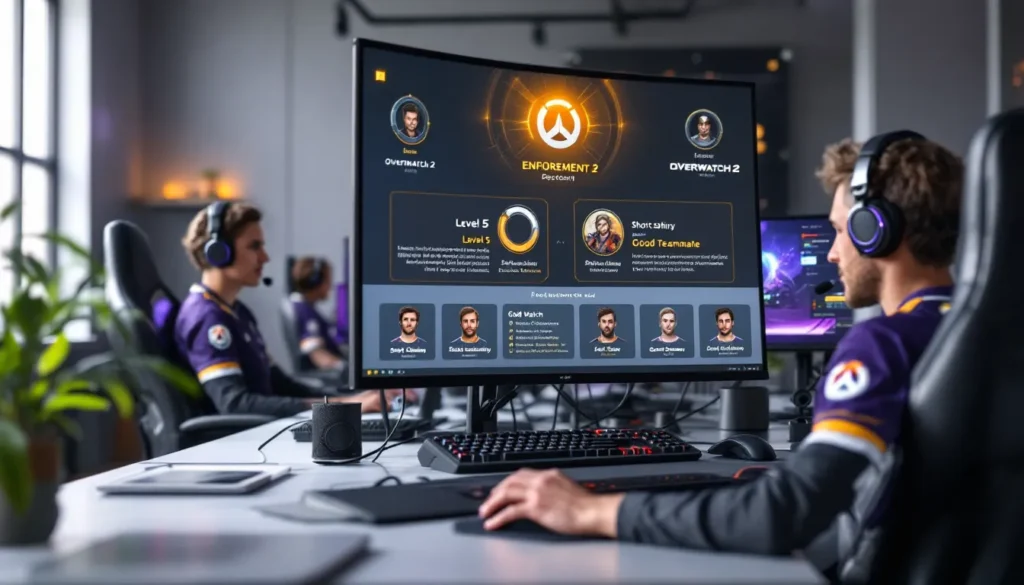
The system assigns each player an endorsement level ranging from 1 to 5, visible on their career profile and in the hero select screen. That colored ring around a player’s portrait? That’s their endorsement level, and it’s one of the first things teammates see. Higher levels signal someone who plays well with others, while lower levels raise red flags about potential toxicity or disconnects.
Blizzard designed this as both a carrot and a stick. Players with high endorsement levels earn periodic rewards like loot boxes and potentially better matchmaking experiences, while those who consistently exhibit poor behavior see their levels tank, and with it, any associated perks.
How the Endorsement System Works
Endorsements are handed out at the end of each match through a simple interface. Players click on up to three teammates they want to recognize, select the endorsement type (more on that in a second), and move on. The process takes about five seconds and is entirely optional, though many players make it a habit.
Endorsements accumulate over time and feed into a hidden algorithm that calculates the player’s current endorsement level. The system tracks not just how many endorsements someone receives, but also factors like endorsement frequency, match completion rate, reports filed against the player, and behavioral patterns. A player who gets endorsed consistently across dozens of matches will climb faster than someone who gets a burst of endorsements in one session.
Crucially, endorsements decay if a player doesn’t maintain positive behavior or stops playing for extended periods. The system isn’t static, it’s constantly evaluating recent performance. Players who take breaks from the game often return to find their endorsement level has dropped a notch or two, requiring them to rebuild their reputation.
The Three Types of Endorsements Explained
Overwatch offers three endorsement categories, each targeting a different aspect of positive gameplay:
Sportsmanship recognizes players who demonstrate fair play, stay positive even during losses, and avoid tilting or blaming teammates. This is the go-to endorsement for someone who kept morale up during a rough match or handled a close loss with grace.
Shot Caller is reserved for players who communicate effectively, make strategic calls, and coordinate team efforts. If someone’s pinging targets, calling out enemy positions, or organizing ult combos, they’ve earned this endorsement. It’s particularly common in competitive modes where communication makes or breaks rounds.
Good Teammate covers everything else, players who flex to needed roles, work well with the team composition, and generally make the match more enjoyable. Someone who swaps to support when the team needs healing or plays their role without feeding? That’s Good Teammate material.
While the system tracks which type of endorsement a player receives, all three contribute equally to endorsement level progression. There’s no mechanical advantage to accumulating one type over another, though the breakdown does appear on a player’s profile as a rough indicator of their playstyle.
Understanding Endorsement Levels and How They’re Calculated
Endorsement levels are the visible result of an invisible calculation. Blizzard hasn’t released the exact formula, but years of community observation and official statements have clarified how the system generally operates. Think of it as a reputation score that fluctuates based on recent behavior, match history, and peer feedback.
The Five Endorsement Levels
The system uses five distinct tiers, each represented by a different color around the player’s portrait:
Level 1 (gray) is the baseline. New accounts start here, and accounts that have been actioned for poor behavior often drop to this level. It signals either inexperience or a history of negative interactions.
Level 2 (bronze) represents slightly above-baseline behavior. Players at this level are completing matches and receiving occasional endorsements, but haven’t established a strong positive track record.
Level 3 (silver) is where the majority of the player base sits. It indicates consistent positive behavior and regular endorsements. This is the “normal” tier for players who aren’t actively toxic but also aren’t going out of their way to be exemplary.
Level 4 (gold) is where players start to stand out. Reaching this tier requires sustained positive behavior, frequent endorsements, and a clean record about reports and disconnects. When players managing team survival strategies maintain communication and positivity, Level 4 becomes achievable.
Level 5 (purple) is the peak. Only a small percentage of the player base maintains this level, as it demands near-perfect behavior over extended periods. Level 5 players rarely get reported, almost never disconnect, and receive endorsements in the majority of their matches.
How Endorsements Are Weighted and Decay Over Time
Not all endorsements carry equal weight in the algorithm. Endorsements from players who rarely hand them out count more than those from players who endorse everyone every match. The system also seems to weight recent endorsements more heavily than older ones, creating a rolling window of behavioral evaluation.
Decay is the silent killer of endorsement levels. Even without negative behavior, endorsement levels will gradually drop if a player stops receiving endorsements at a consistent rate. This decay accelerates during periods of inactivity, players who take a week off will often return to find their level has dropped.
Reports filed against a player have an immediate and significant impact. A single report for abusive chat or gameplay sabotage can wipe out the progress from dozens of endorsements. Multiple reports in a short timeframe can trigger an automatic level drop, even before any manual review occurs.
Disconnects and early match exits also tank endorsement levels. The system doesn’t distinguish between rage quits and legitimate connection issues, leaving a match early hurts the score regardless of intent. Players with unstable internet connections often struggle to maintain high endorsement levels even if their in-game behavior is exemplary.
How to Earn Endorsements and Level Up Fast
Climbing the endorsement ladder isn’t about gaming the system, it’s about consistently demonstrating the behaviors the system rewards. Players who approach matches with the right mindset and habits will naturally accumulate endorsements without having to beg for them.
Best Practices for Positive Team Communication
Communication is the fastest route to endorsements, particularly Shot Caller endorsements. Using voice chat or text chat to make strategic calls immediately sets a player apart. Calling out enemy positions (“Reaper flanking left”), coordinating ultimate combinations (“I have Graviton, anyone have Dragon?”), or simply providing encouragement (“Nice pick.”) all contribute to a positive atmosphere.
The tone matters as much as the content. Players who communicate without being bossy, acknowledge mistakes without finger-pointing, and stay calm during losses create the kind of match experience that teammates want to endorse. Even simple callouts like “Group up” or “Fall back” demonstrate engagement and team focus.
Knowing when to stay silent is equally important. Cluttering comms with unnecessary chatter, complaining about teammates’ hero picks, or backseat gaming are all quick ways to avoid endorsements. The goal is to be helpful, not domineering.
Playing Roles That Encourage Team Synergy
Certain roles naturally generate more endorsements than others. Support players, especially those on main healer duty, receive endorsements almost by default because teammates notice when they’re kept alive. Tank players who create space, peel for supports, and enable their team also rack up endorsements for Good Teammate.
DPS players can earn endorsements by being flexible and aware. Swapping to counter an enemy composition, protecting supports from flankers, or focusing on objective play rather than pure frag-hunting demonstrates team-first thinking. DPS players who chase kills at the expense of objective time rarely get endorsed, no matter how high their damage numbers.
Flexibility itself is endorsement gold. Players who fill needed roles, especially when it means swapping off their main, signal that they prioritize winning over personal stats. That kind of selflessness doesn’t go unnoticed in the post-game screen. Those interested in team-focused strategies understand that role flexibility often translates directly to endorsement gains.
Avoiding Behaviors That Lower Your Endorsement Level
Just as important as what to do is what not to do. The fastest way to destroy an endorsement level is through reportable behavior: abusive chat, throwing matches, afking, or griefing teammates. Even a single suspension can drop a player from Level 4 to Level 1 instantly.
Leaving matches early is another endorsement killer. Whether it’s a rage quit after a bad round or a legitimate emergency, the system treats all early exits the same way. Players with a pattern of leaving, even just a handful of disconnects across hundreds of matches, will struggle to climb past Level 3.
Subtle toxicity counts too. Passive-aggressive text chat, spam-pinging teammates, or deliberately refusing to cooperate with the team composition might not trigger reports but will definitely prevent endorsements. Players remember the Moira who DPS’d instead of healing, and they won’t be clicking that endorsement button.
Endorsement Rewards and Benefits You Can Unlock
The endorsement system isn’t purely cosmetic, it offers tangible rewards that make the grind worthwhile. These rewards have evolved since the system’s introduction, with Blizzard periodically adjusting the incentive structure to keep players engaged.
Loot Boxes and In-Game Currency Rewards
Players at higher endorsement levels periodically receive reward notifications in the form of loot boxes or in-game currency. These rewards typically arrive after a certain number of matches at a given endorsement level, though the exact trigger is deliberately opaque to prevent exploitation.
Level 3 and above unlock the potential for these periodic rewards. Level 4 and 5 players report receiving rewards more frequently and in slightly larger quantities, though the difference isn’t dramatic. The rewards themselves usually consist of a loot box or a small amount of competitive points or credits.
While the rewards aren’t game-changing, they add up over time. A player who maintains Level 4 across several seasons will accumulate enough bonus loot boxes to unlock a handful of cosmetics or duplicate currency without spending real money. It’s a nice bonus rather than a primary motivator, but it’s something.
Blizzard has hinted at expanding endorsement rewards in future updates, potentially tying more significant unlocks to sustained high endorsement levels. Community feedback has consistently requested more meaningful incentives, and recent competitive gaming discussions suggest that reputation-based reward systems are becoming more common across multiplayer titles.
Priority Queue Access and Matchmaking Advantages
The less tangible but potentially more valuable benefit is matchmaking priority. Blizzard has never explicitly confirmed whether high endorsement levels receive queue priority, but community testing and anecdotal evidence strongly suggest it’s a factor, particularly during peak hours for competitive modes.
More important than queue times is match quality. The endorsement system is designed to group high-endorsement players together when possible, creating lobbies where positive behavior is the norm. While it’s not a hard rule, Level 5 players still get matched with Level 2s regularly, the tendency is clear enough that many players notice a difference in team cohesion at higher levels.
This creates a virtuous cycle: positive players match with other positive players, leading to better match experiences, which encourages continued positive behavior, which maintains high endorsement levels. Conversely, low-endorsement players are more likely to be matched with other low-endorsement players, creating lobbies where toxicity is more prevalent.
Why Your Endorsement Level Matters for Competitive Play
In competitive modes where coordination and mental fortitude determine outcomes, the overwatch endorsement level functions as an informal vetting mechanism. It’s not perfect, but it provides useful signal about who’s likely to be a constructive teammate.
Impact on Team Quality and Match Experience
When five random players load into a competitive lobby, they’re making snap judgments about each other based on limited information: rank, hero picks, career stats, and, increasingly, endorsement level. A player with a Level 4 or 5 endorsement immediately establishes credibility that a Level 1 or 2 simply doesn’t have.
This affects everything from who gets trusted with shot-calling to how quickly teammates tilt when things go wrong. A high-endorsement player who makes a mistake is more likely to receive the benefit of the doubt, while a low-endorsement player might face immediate criticism for the same error. It’s not fair, but it’s human nature.
The match quality difference is real. Games where the majority of players are Level 3+ tend to feature more communication, less toxicity, and better coordination. These matches aren’t necessarily easier to win, but they’re more enjoyable to play regardless of outcome. Players who prioritize their competitive experience, not just their SR, recognize that endorsement level influences the intangibles that make ranked tolerable.
Many competitive players using optimal strategies have noted that endorsement level correlates loosely with game sense and team awareness, though it’s far from a perfect predictor of skill.
How Endorsements Influence Player Reputation
In smaller regions or at higher ranks where the same players encounter each other repeatedly, endorsement level becomes part of a player’s reputation. Streamers and content creators with Level 5 endorsements wear it as a badge of honor, while well-known toxic players often languish at Level 1 or 2 even though high mechanical skill.
Some players use endorsement level as a screening tool for group formation. LFG posts often specify “Level 3+ only” or similar requirements, recognizing that endorsement level serves as a rough proxy for team-oriented behavior. While it’s not a guarantee, plenty of Level 2 players are perfectly pleasant, and some high-level players are passive-aggressive, the correlation is strong enough to be useful.
The reputation effect extends to professional and semi-professional play as well. Teams scouting talent increasingly consider behavioral track records alongside mechanical skill, and endorsement level is one datapoint in that evaluation. A player with consistent Level 1 or 2 endorsements raises questions about coachability and team fit, regardless of how well they frag.
Common Mistakes That Tank Your Endorsement Level
Understanding what not to do is just as critical as knowing best practices. Many players inadvertently sabotage their endorsement level through behaviors they don’t realize are being tracked or weighted.
Inconsistent play sessions create decay problems. Players who binge Overwatch for a weekend then disappear for two weeks will watch their endorsement level gradually drop during inactivity. The system rewards consistent presence, not sporadic bursts.
Begging for endorsements in chat is counterproductive. Not only does it rarely work, but it also signals insecurity and can actually reduce the likelihood of receiving endorsements. Players endorse performances, not requests.
Playing tilted destroys endorsement levels faster than almost anything else. A player having a bad day who starts making passive-aggressive comments, throwing shade at teammates, or exhibiting frustration in voice chat will receive zero endorsements and potentially eat reports. The system has no sympathy for “having a rough match”, the behavior is what counts.
Not endorsing others might seem irrelevant to one’s own level, but community observations suggest that players who never hand out endorsements receive fewer in return. The system may track endorsement reciprocity as a factor in the algorithm, or it might simply be that generous players tend to play with other generous players.
Connection instability is an often-overlooked factor. Players with frequent disconnects, even if totally unintentional, will struggle to maintain high endorsement levels. The system can’t distinguish between a router hiccup and a rage quit, so both are penalized equally. Anyone serious about climbing should ensure their connection is stable before jumping into competitive matches.
Autopiloting through matches without any communication or engagement means missing out on easy endorsements. Even great mechanical players who never use comms, never type in chat, and never demonstrate visible team awareness get fewer endorsements than mediocre players who actively communicate. According to professional player analysis, communication and engagement are often more visible to teammates than raw mechanical skill.
Tips for Maintaining a High Endorsement Level Long-Term
Reaching Level 4 or 5 is an achievement, but maintaining it requires sustained effort and behavioral consistency. The players who stay at high endorsement levels for months or years have internalized specific habits.
Play regularly but don’t overdo it. Consistent play prevents decay, but marathon sessions when already tilted lead to behavioral slips. A player who stops after a couple of bad matches will maintain their level better than someone who grinds through ten straight losses while their mental deteriorates.
Make communication a default habit, not an exception. Even simple, repetitive callouts, “Tracer on me,” “Rein one shot,” “Regroup”, demonstrate engagement and make endorsements more likely. Players should treat comms as a core mechanic, not an optional feature.
Focus on objective play over stats. Players who prioritize winning rounds and completing objectives naturally demonstrate team-first behavior that translates to endorsements. DPS players who contest points, tanks who don’t feed, and supports who stay alive all exhibit visible team value that gets recognized in the post-game screen.
Stay positive even during losses. This is the hardest habit to maintain but the most impactful. A player who says “Good try, almost had it” after a close loss will get endorsed far more often than someone who silently disconnects or complains about team comp. The matchmaking gods reward grace under pressure.
Endorse others generously. Taking five seconds after each match to hand out three endorsements creates positive karma and potentially encourages reciprocity. It costs nothing and reinforces the habit of recognizing good behavior.
Avoid playing when tilted or under time pressure. The single biggest cause of endorsement level drops is playing while already frustrated or knowing you might need to leave mid-match. If the mental isn’t there, it’s better to skip the session entirely than risk behavioral reports or early exits.
Track your level over time. Players should check their endorsement level weekly to spot trends. A gradual decline might indicate that communication habits have slipped or that decay is outpacing endorsement gains. Early awareness allows for course correction before dropping a full tier.
Conclusion
The endorsement system in Overwatch 2 does more than hand out occasional loot boxes, it shapes the social fabric of every match. Players who understand how to earn and maintain high endorsement levels don’t just get better rewards: they gain access to higher-quality matches, build reputations that open doors in competitive play, and contribute to a less toxic community overall.
The mechanics aren’t mysterious once you strip away the hidden algorithm. Consistent positive behavior, active communication, team-first play, and avoiding reportable conduct are the pillars of high endorsement levels. Players who approach every match with these principles will naturally climb and stay at Level 4 or 5, while those who neglect them will struggle to escape the Level 2 plateau.
As Overwatch 2 continues evolving through 2026 and beyond, the endorsement system will likely remain a central feature of the matchmaking ecosystem. Investing in a strong endorsement level now pays dividends in every future match, better teammates, more enjoyable games, and a reputation that precedes you in the best possible way.


